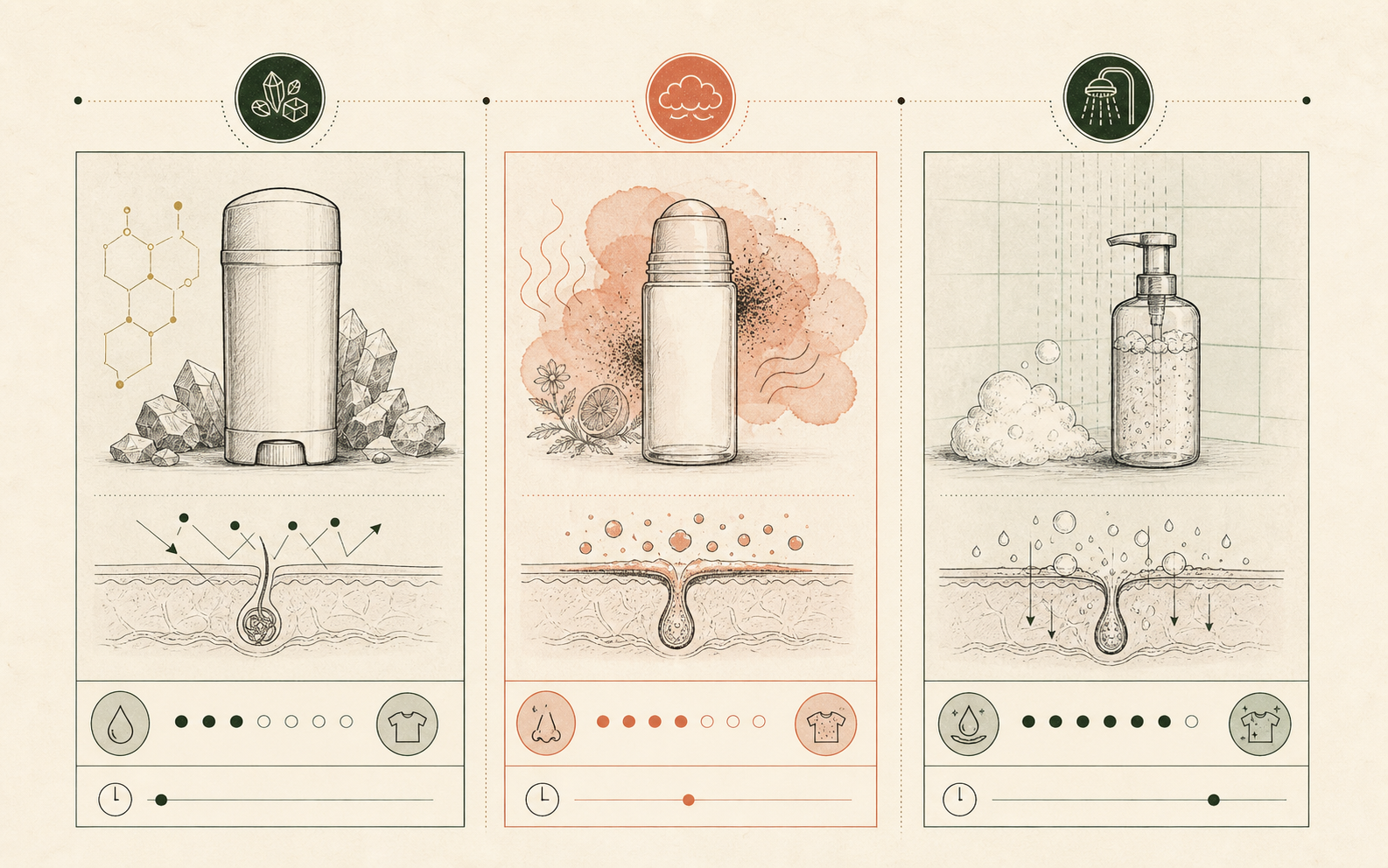
The underarm aisle is confusing on purpose. One word, "deodorant," covers products that do three completely different things. Some reduce sweat. Some add scent. One washes the skin. Different jobs, same shelf, same name.
This is why the aisle feels like a guessing game. You are asked to pick between a dozen sticks and sprays without anyone telling you what each one actually does to your body. So you grab what you grabbed last time, or whatever smells fine, and hope.
There is a simpler way through it. Stop choosing a product and start choosing a verb. Do you want to reduce wetness, change scent, or wash the skin? Answer that, and the right category is obvious.
If you found this page because you were looking for an alternative to deodorant, start here: the alternative is not one magic format. It is a clearer routine. Decide whether you want less wetness, a different scent, or clean underarm skin before clothes go on.
Three verbs, not three brands
Three jobs hide behind that one word, and each is a different verb. Reduce. Scent. Wash. They are not better or worse than one another. They are answers to different questions about the same patch of skin.
And the underarm earns its own answer, because it is not like the rest of the body. Eccrine glands cover most of your skin and exist to cool you down. Apocrine glands cluster in a few places, the armpit among them, and their secretions are richer. Neither one smells on its own. Specific skin, not dirty skin.
So before you read a label, name the job. Here is the whole map in three lines.
Antiperspirant reduces wetness
Antiperspirant is the only one of the three that the government treats as a drug. In the United States, anything that claims to reduce sweat is regulated as an over-the-counter drug. The FDA monograph covers products that reduce underarm dampness, perspiration, sweat, sweating, or wetness. That is a real distinction: a drug, not a cosmetic.
The mechanism is aluminum-based actives. The National Cancer Institute describes them forming a temporary plug inside the sweat duct, so less sweat reaches the surface. If your real problem is a damp shirt in a meeting or stress wetness before a flight, that is exactly the verb you want.
No aluminum panic story here. If an antiperspirant works for you, it is a legitimate choice, and the science does not support the scare headlines. The only thing worth being clear about is the job. An antiperspirant reduces sweat. It is not built to wash the skin, and scent is a side feature, not the point.
Reach for antiperspirant when:
Wetness is the problem. You want less sweat showing on skin or fabric and you are fine carrying a leave-on drug product through the day. Follow the label, especially on broken or irritated skin.
Deodorant changes scent
Deodorant is a cosmetic, not a drug. It does not touch your sweat at all. Its whole job is changing how the underarm smells, using fragrance, odor absorbers, acids, or powders. The FDA treats it as a cosmetic precisely because it works on appearance and scent, not on the body's chemistry.
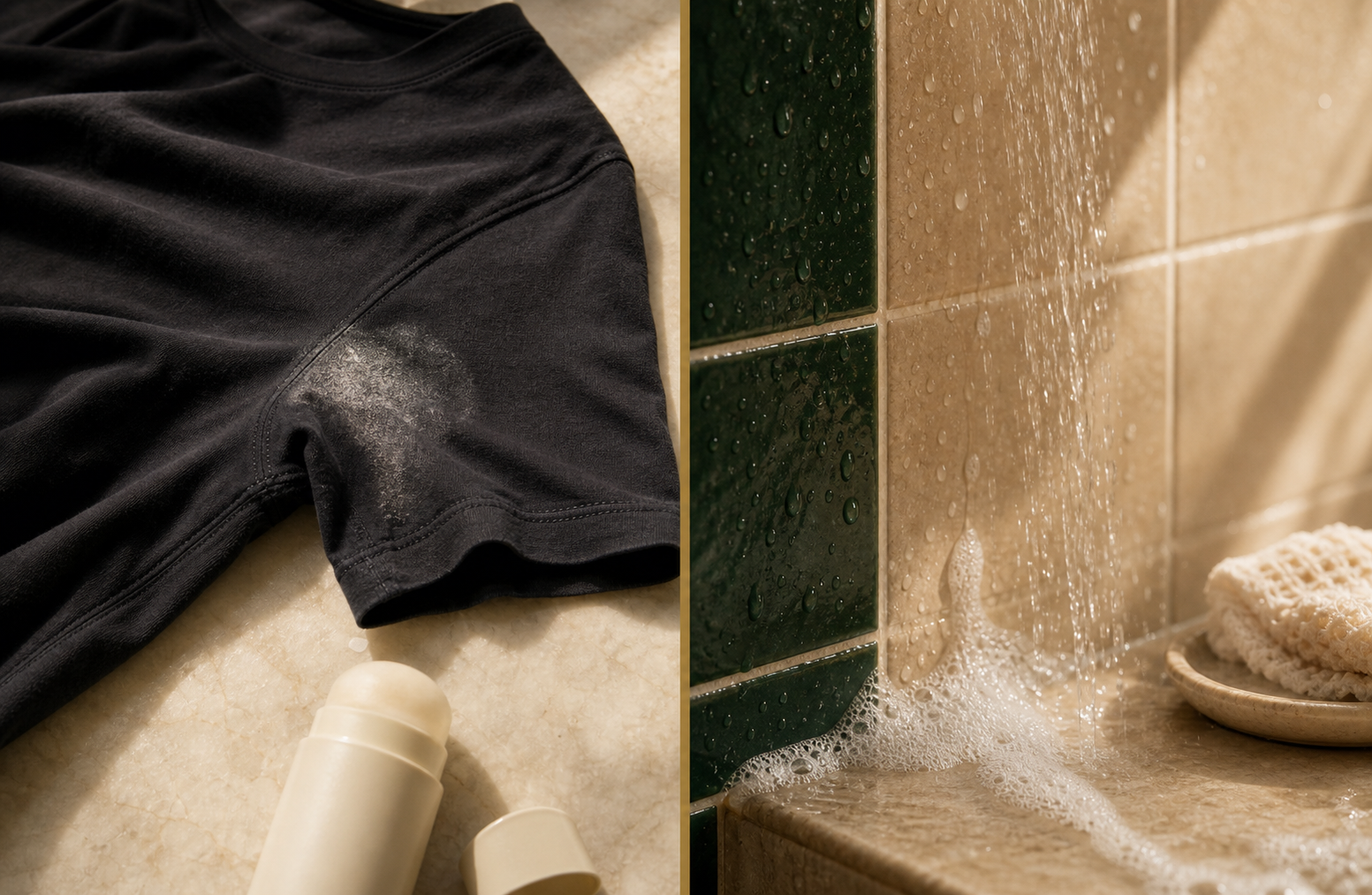
Here is the part worth understanding: deodorant is a leave-on layer. You apply it after the shower and carry it into your shirt, where it stays all day. For plenty of people that layer is the actual complaint. White marks on a dark tee. Waxy build-up. Gel drag. A fragrance that argues with the perfume you actually chose. The sense that the underarm got dressed up instead of cleaned.
And it helps to know what odor even is, because it is not sweat. James and colleagues, in a 2013 review in FEMS Microbiology Ecology, describe underarm smell as microbes transforming odorless secretions into volatile, smelly molecules. The sweat arrives clean. Bacteria do the rest. Odor is the enemy, not sweat, which is why masking it with scent only ever covers the trail instead of clearing it.
Reach for deodorant when:
Scent is the problem you want to solve, and you are happy to wear a leave-on fragrance layer. Residue, reapplication, and a stick under the shirt come with the territory.
A shower deodorant washes the skin
This is the verb the shelf forgot. For an area most people only ever address with a stick, washing is the obvious move nobody was selling. A shower deodorant is exactly that: a wash made for the underarm, squeezed on and massaged in during the shower, then rinsed clean with water before you get dressed — no soap on the underarms, water alone carries it away. Not sweat reduction. Not perfume. Washing. GoodSweat is the first one of its kind.
The shift is gentle, not radical. You are already in the shower. Instead of skipping the underarm and patching it later with a layer that lives under your shirt, you give it the same minute you give the rest of you. Squeeze. Massage. Rinse. Towel off. Get dressed. Nothing rides along into the day.
The relief is in the timing. The cleanest your underarms get is the moment you step out of the shower. A shower deodorant puts the care right there, then sends it down the drain.
Squeeze on, massage in, rinse clean, and get dressed without the sticky swipe.
Reach for a shower deodorant when:
Starting clean is the point. You would rather wash the underarm in the shower than carry a leave-on stick, spray, or gel under your shirt all day. That is the practical alternative to deodorant: not fear, not a purity badge, just underarm care that happens where the water already is.
The shelf, reorganized by verb
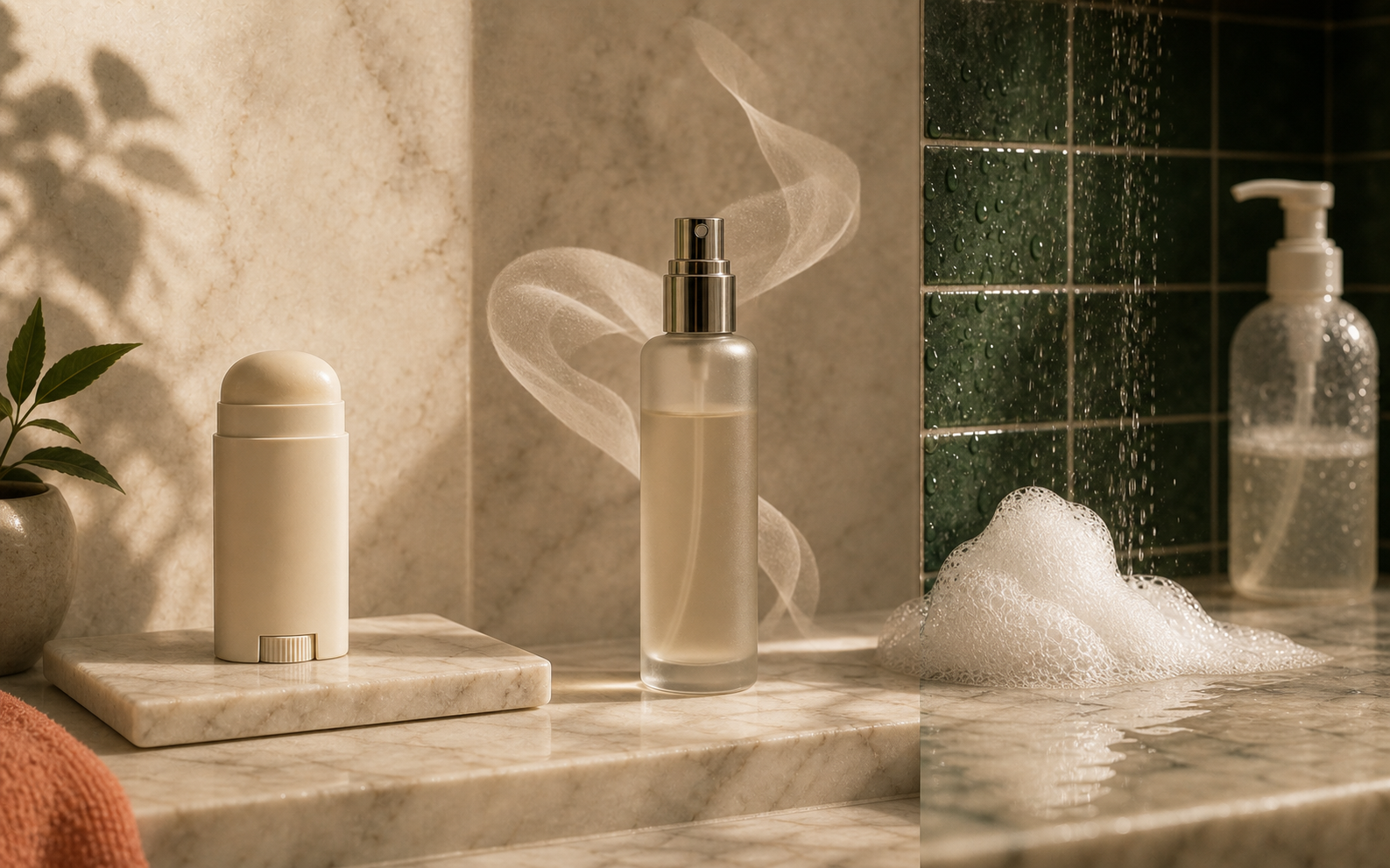
Once you sort by the job instead of the marketing, the whole aisle calms down. Three columns, three verbs, three honest answers. The confusion was never yours. It was a shelf that used one word for three things.
Wetness showing through a shirt is antiperspirant work. Scent you want changed is deodorant work. Skin you want clean before clothes go on is what a shower deodorant is for. You might use one. You might use two. The point is that you get to decide on purpose.
No scare tactics, just clarity
The easy version of this story makes one category the hero by making another the villain. We are not doing that. An antiperspirant is not dangerous. A deodorant is not a con. Each verb is real, and each has a place. Making you afraid of one to sell you another is exactly the kind of noise that made the aisle confusing in the first place.
So here is the whole thing, finally simple. You are not choosing an identity. You are choosing a verb.
GoodSweat is the wash. The underarm gets cleaned where the water already is, then rinses away with everything else, and you get dressed.
Sources
- FDA, "Is It a Cosmetic, a Drug, or Both? (Or Is It Soap?)". The source for why a product's intended use and claims, not its format, decide whether it is a cosmetic or a drug. Underpins the deodorant-as-cosmetic and shower-deodorant-as-cosmetic framing.
- Electronic Code of Federal Regulations, 21 CFR Part 350. Establishes the U.S. over-the-counter antiperspirant drug category and its active-ingredient context.
- Cornell Legal Information Institute, 21 CFR 350.50. The regulatory language for reducing underarm dampness, perspiration, sweat, sweating, or wetness, used to define antiperspirant as the wetness verb.
- NCBI Bookshelf, "Anatomy, Skin, Sudoriferous Gland". The eccrine and apocrine gland anatomy behind "cooling glands cover the body, richer glands cluster in the armpit."
- James et al., 2013, "Microbiological and biochemical origins of human axillary odour," FEMS Microbiology Ecology. The basis for "sweat arrives odorless; microbes turn it into smell." Source for odor being the enemy, not sweat.
- Minhas et al., 2018, "Structural basis of malodour precursor transport in the human axilla," eLife. Adds the modern biochemistry of how odor precursors are carried and transformed in the underarm.
- National Cancer Institute, "Antiperspirants/Deodorants and Breast Cancer". The neutral description of aluminum-based actives forming a temporary plug in the sweat duct, and the reason this guide avoids aluminum scare framing.