A bathhouse field report
After the cold plunge
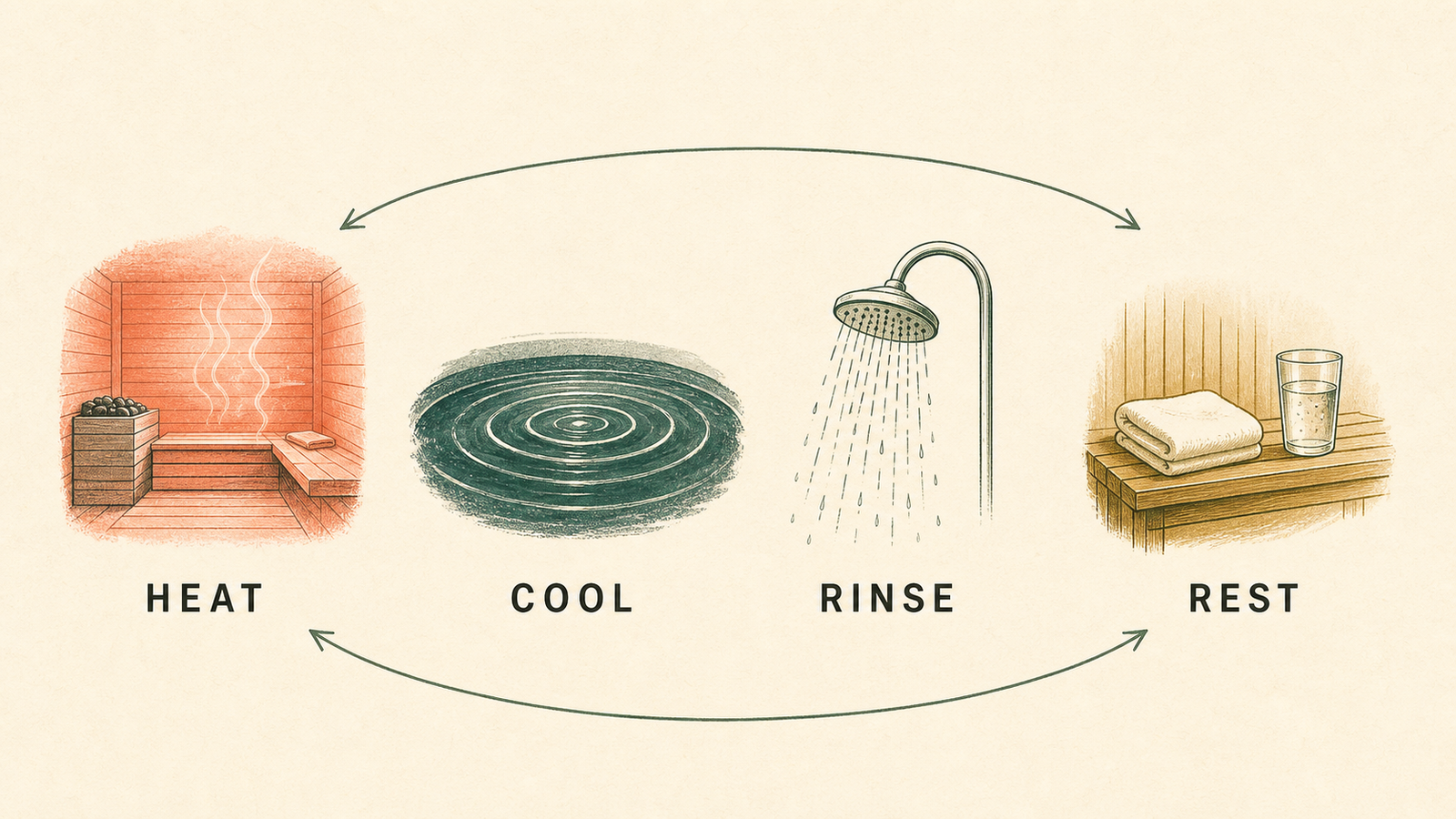
The backyard plunge video had its moment. What is replacing it feels older and calmer: bathhouses, sauna clubs, and the repeatable rhythm of heat, cool, rinse, rest.1
The plunge got quieter
The shock-value tub video is fading. People still cold-soak, but the camera is mostly off and the room is full.
Bathhouses are a third place
Urban bathhouses, recovery studios, and sauna clubs are pulling people into long, social, multi-hour thermal sessions.
The cycle matters more
What looks like a trend is really a return to an old shape: heat, cool, rinse, rest, repeat. Less spectacle, more cadence.
The room got quieter; the line got longer
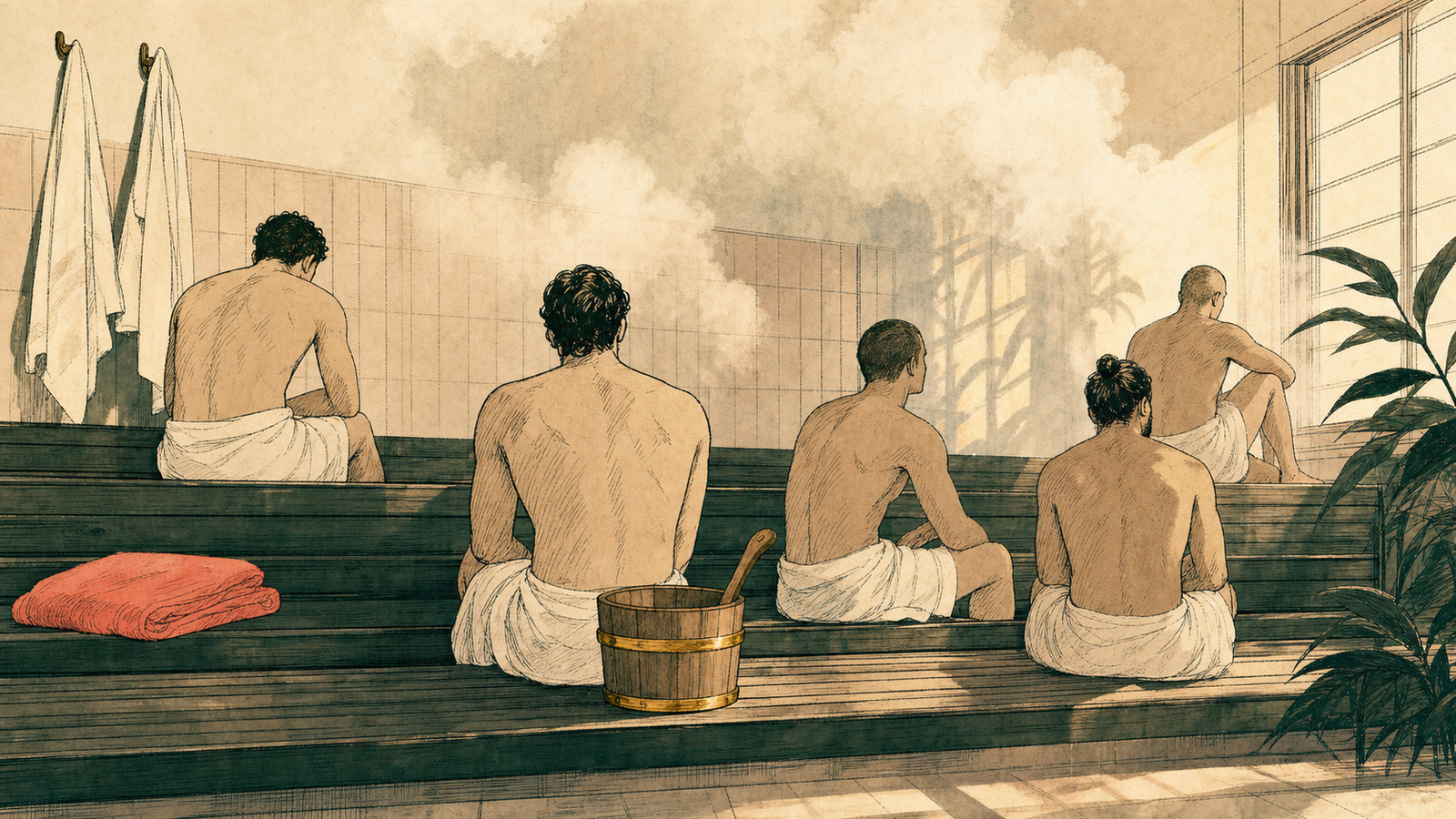
The first thing you notice at a modern bathhouse, on a Thursday at seven, is that almost nobody is filming. The phones are in a wooden cubby by the door. A retired schoolteacher in a navy one-piece walks past two software engineers and a woman in a robe reading what looks like a library copy of a Lydia Davis collection. The plunge is in the corner. People use it. People also skip it. The plunge is no longer the point of the room.
This is the visible end of a shift that the Global Wellness Institute, in its 2026 hydrothermal trends report, calls a move toward "sustainable, repeatable cooling practices" and away from "shocking single-modality plunges."1 In plain language: the stunt version is losing the room. What is replacing it is older and calmer: a long thermal session, a shared bench, a wet floor, and a row of people doing roughly the same thing.
The room is quieter because more people are in it. Cold-plunge content was a solo act. The bathhouse is a shared rhythm.
What the research actually says about ice
The cold-plunge backlash has a scientific shape to it. A 2025 PLOS ONE systematic review by Tara Cain and colleagues pooled eleven randomized trials covering 3,177 participants and landed carefully: cold-water immersion showed some promise for stress reduction at twelve hours post-immersion and for sleep quality, and the authors documented a 29 percent reduction in sickness absence among cold-shower participants in one trial. They also documented a sharp, temporary inflammatory spike in the first hour, and no significant improvement in mood.2
Their summary line is unusually direct for a meta-analysis: "while CWI shows promise for specific outcomes, more robust evidence is required to establish its safety profile and validate its purported health benefits." That is a long way from the certainty that animated the GoPro era.
The dosing literature has narrowed in the same direction. A 2025 network meta-analysis by Hai Wang and colleagues, in Frontiers in Physiology, found that the most effective protocols for muscle-soreness recovery sit at ten to fifteen minutes in water of eleven to fifteen degrees Celsius, not the deeper, briefer shock the genre trained people to expect.3 Eleven to fifteen Celsius is closer to a chilly hotel pool than to a barrel of ice. The recommendation is bracketed, modest, and repeatable. It looks like a protocol, not a stunt.
The bench tells the story
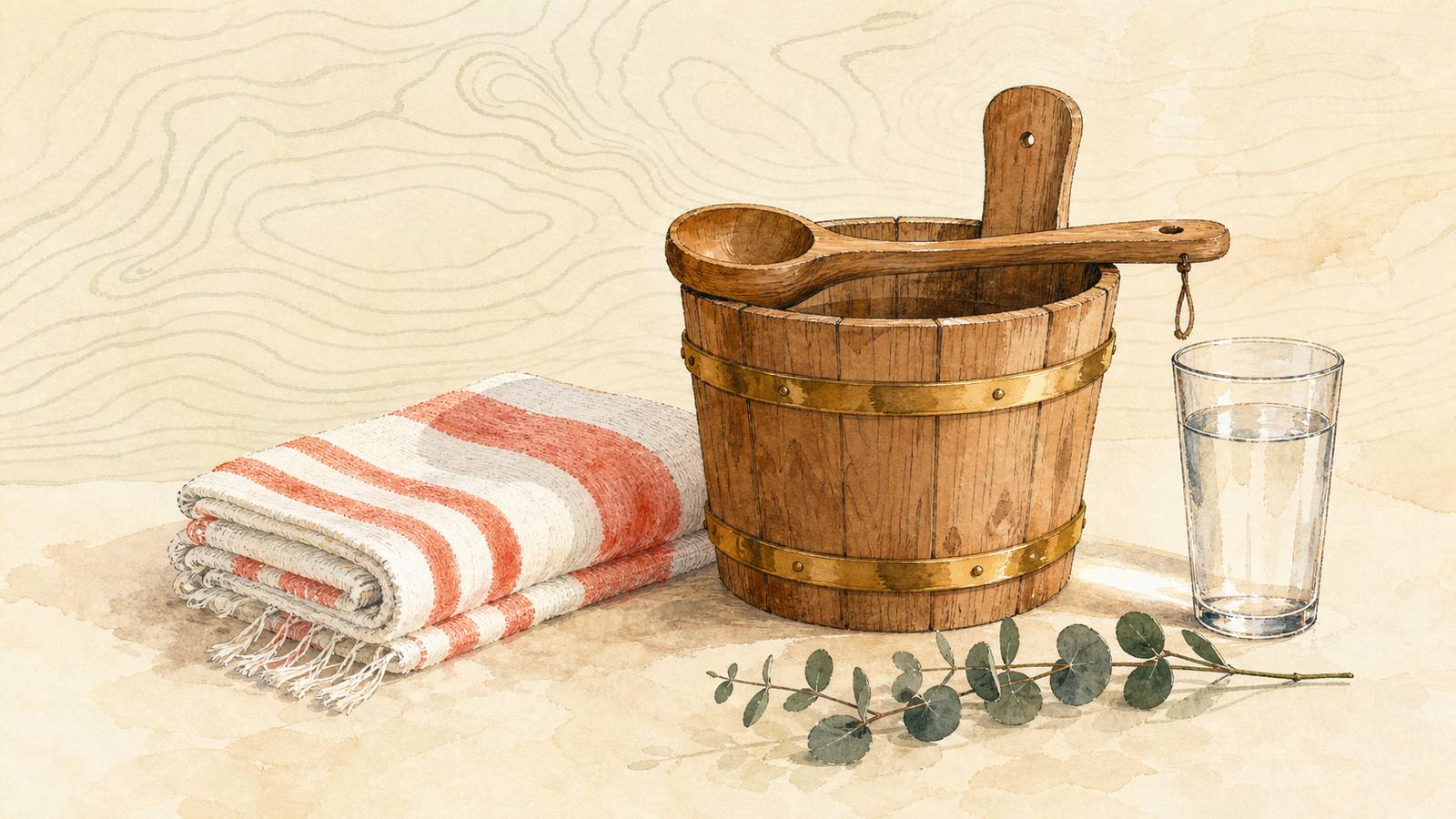
You can read the cultural shift by watching the bench. A bathhouse bench has an etiquette you learn within fifteen minutes of arriving. You leave space. You don't talk loudly. You don't make eye contact at the wrong angle. If you've been in the sauna for a while and a new person comes in, you nod once and adjust slightly. The cedar warms a half-shade darker where bodies have been. The air smells faintly of eucalyptus and clean cotton.
The Global Wellness Institute report calls these venues "third places for wellness and connection" and notes that guests are now spending half-days inside them.1 That is the part the cold-plunge era could not deliver. A cold plunge takes ninety seconds and produces a video. A bathhouse takes three hours and produces, for most people, a conversation, a nap, and a slow walk home.
The same logic is rebuilding adjacent culture. Run clubs are ending at saunas instead of bars. Recovery studios are selling contrast-therapy memberships the way climbing gyms sold day passes a decade ago. Hotels are bringing the thermal cycle into rooms and spas. The appeal is repeatability, not shock.
What the new ritual asks of you
If you have spent any time at a Russian or Finnish bathhouse, none of this reads as new. The four-beat cycle (heat, cool, rinse, rest) is old enough that calling it a trend feels funny. What is new is the audience: a generation that arrived through cold-plunge content and is staying for the bench. The plunge sold a single act. The bathhouse offers a cadence.
The rinse is part of that cadence. In every bathhouse worth visiting, there is careful etiquette around the shower between rooms: wash before the sauna, rinse after the cold, rinse again before resting. The underarm and the back of the neck are where chlorine, lake water, sweat, and eucalyptus oil collect. A quick shower between cycles keeps the bench better for the next person.
Where GoodSweat fits, briefly
GoodSweat is a rinse-off shower deodorant built around Octenidine HCl and odor-binding minerals. It belongs in the shower routine: squeeze on, massage in, rinse clean, then get dressed without the sticky swipe. In a bathhouse, that means clean underarms before the next bench. At home, it is the same idea with less ceremony.
Sources
- Global Wellness Institute. "Hydrothermal Initiative Trends for 2026." Industry trends brief from the GWI Hydrothermal Initiative, April 6, 2026. Source for the move toward "sustainable, repeatable cooling practices," urban thermal-center growth, and the "third places" framing.
- Cain T, Brinsley J, Bennett H, Nelson M, Maher C, Singh B. "Effects of cold-water immersion on health and wellbeing: A systematic review and meta-analysis." PLOS ONE, January 29, 2025. Peer-reviewed systematic review of 11 randomized trials (n=3,177); source for the stress-at-12-hours, sleep-quality, sickness-absence, and acute-inflammation findings.
- Wang H, Wang L, Pan Y. "Impact of different doses of cold water immersion (duration and temperature variations) on recovery from acute exercise-induced muscle damage: a network meta-analysis." Frontiers in Physiology, February 26, 2025. Source for the 10-15 minute, 11-15°C protocol finding (substituted for the 2026 BMC Sports Science protocol review when that page returned a 303 redirect; both papers reach the same dosing range from different angles).