Heat and routine
Extreme heat is changing your shower routine
Hotter years are bringing sweat into normal plans: the commute, the errand, the outdoor table, the walk from parking to pickup. That makes timing matter more than shame.5
Plan around heat
Commutes, errands, school pickup, outdoor work, and events can all put sweat into the schedule.
Sweat helps you cool down
Evaporation moves heat off skin. The issue is what moisture, fabric, and time can do afterward.
Reset sooner
On hot days, underarm care may need to happen earlier: wash in the shower, rinse clean, change the shirt.
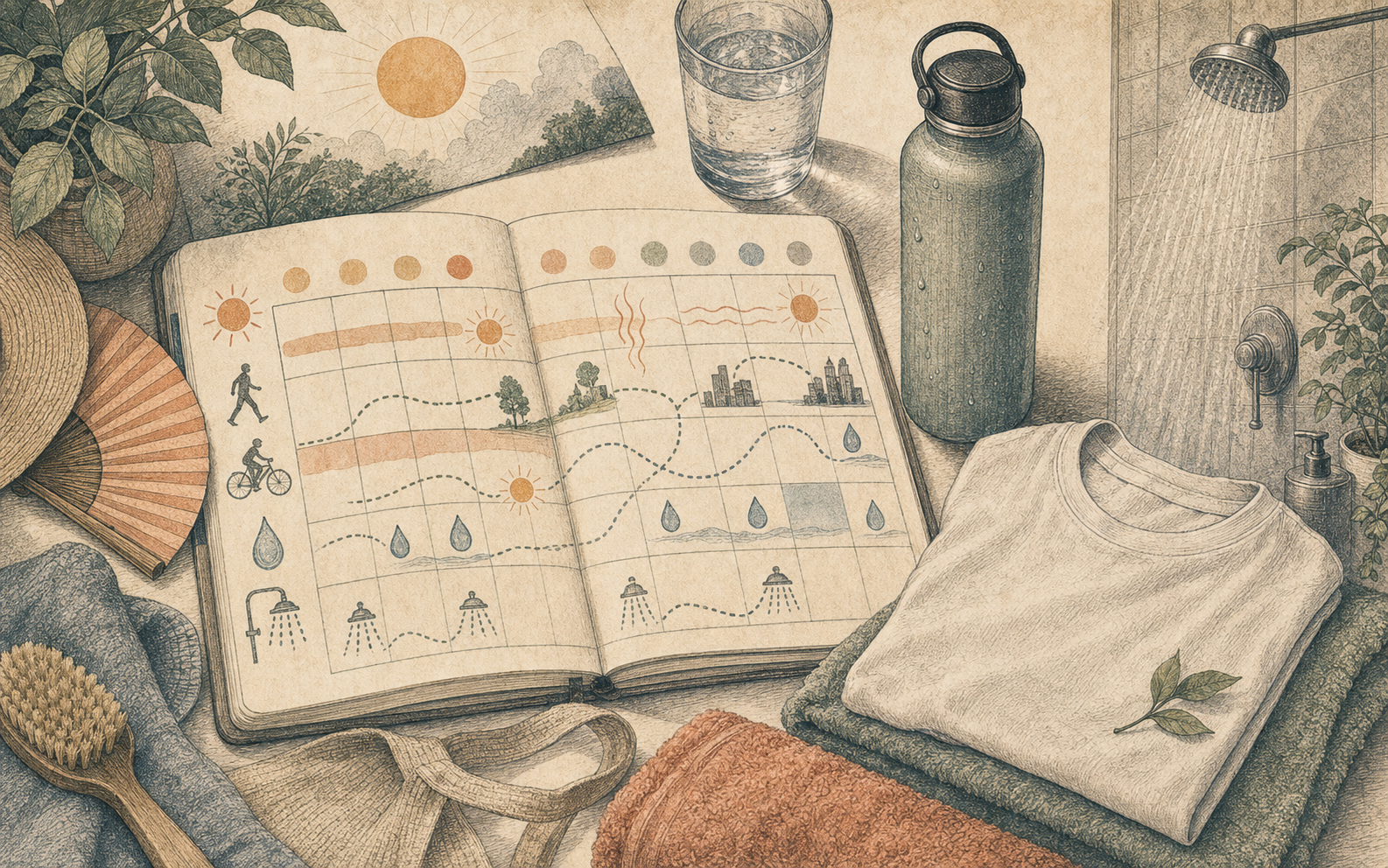
Hot days ask for logistics
Hot weather has always made people sweat. What feels different now is how often heat interrupts ordinary plans: the train platform, the school pickup line, the outdoor job, the walk to dinner, the festival line with no shade.1, 2
The body sweats because heat has to go somewhere. As sweat evaporates, it helps move heat away from skin. That is useful, normal physiology, not something to apologize for.4
The practical problem is timing. You can be taking care of yourself and still arrive with a damp shirt, sticky fabric, or the need to rinse clean before the next room.
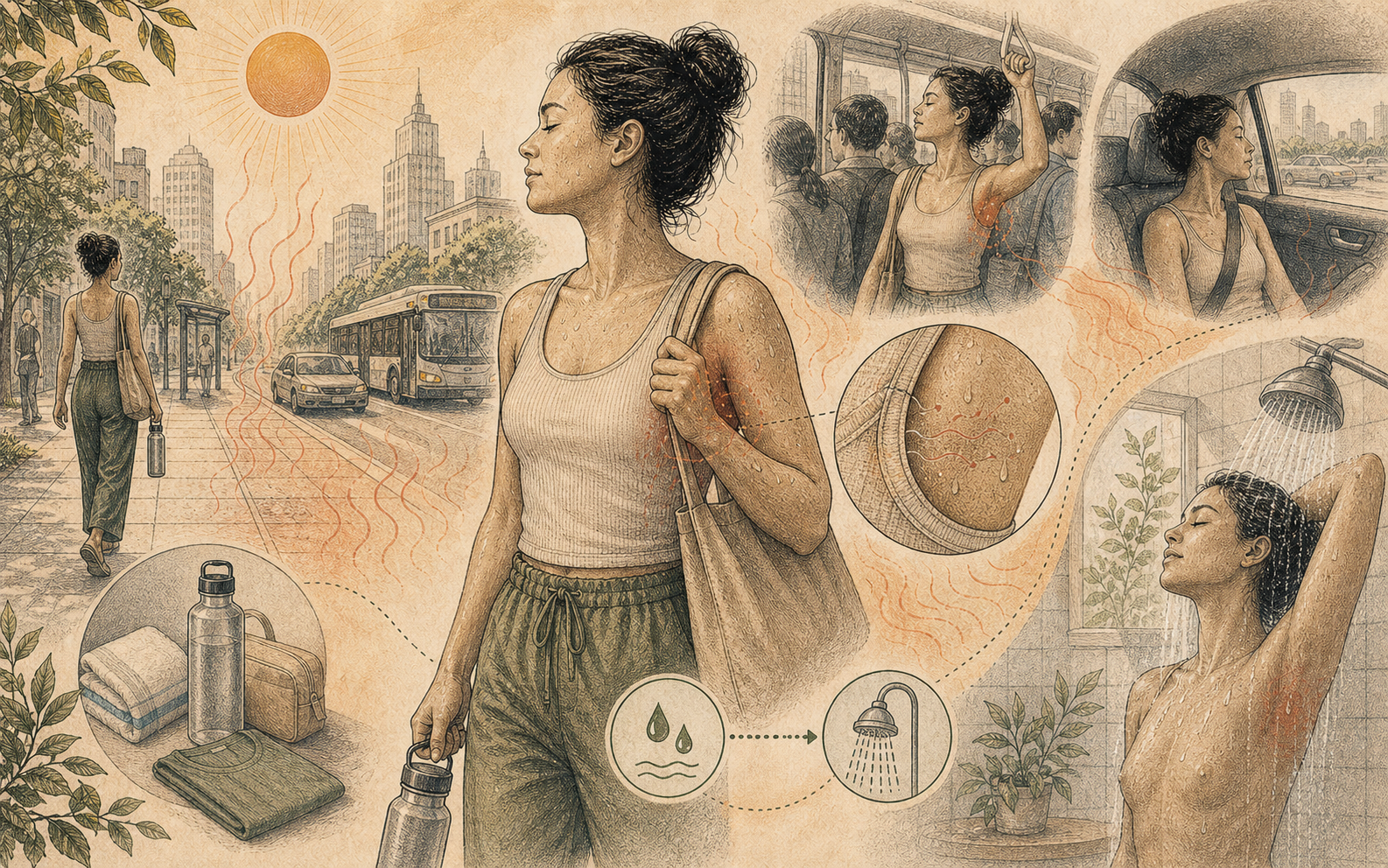
Heat changes what happens under the shirt
Heat does more than add moisture. It means warmer skin, more fabric contact, more friction, more time before a shower, and a better chance that yesterday's shirt choice becomes today's odor problem.
The routine changes with it. The old version was gym days and shower days, with maybe a deodorant reapply in the bag. The new version also includes commute days, outdoor-event days, and the simple habit of packing a clean shirt.
A clear boundary matters. Dizziness, headache, weakness, nausea, confusion, or shortness of breath in the heat belong in heat-health guidance, outside the hygiene conversation. CDC and NIOSH guidance on heat exhaustion and heat stroke is the right place to start.2, 3

The shower is the reset
Underarm care on a hot day is practical. Wash the areas that carried the day, rinse clean, and change the shirt when you can. Sweat helps with cooling; the bathroom helps you reset.
GoodSweat is built for that shower routine: squeeze on, massage in, rinse clean. It is a shower deodorant that leaves sweating alone, because odor is the enemy, not sweat.
Sources
- "Clinical Overview of Heat." CDC clinical overview for hot-day health risks, at-risk groups, and the seriousness of heat exposure.
- "About Heat and Your Health." CDC public guidance on staying cool, staying hydrated, and recognizing symptoms of overheating.
- "Heat-related Illnesses." NIOSH/CDC occupational heat-stress reference for heat rash, cramps, exhaustion, and heat stroke boundaries.
- Baker LB. "Physiology of sweat gland function: The roles of sweating and sweat composition in human health." Temperature, 2019;6(3):211-259. Peer-reviewed review used for sweat physiology and the body's cooling function.
- "2024 was warmest year in the modern record for the globe." NOAA climate context for why heat planning is becoming a recurring part of daily life.