Underarm care field guide
When reapplying deodorant stops helping
The midday swipe can help in a pinch. It also adds fresh product to skin, fabric, and whatever was already there. Clean skin starts with a rinse.
A reapply can buy time
Sometimes you need it. No shame. It just cannot wash away sweat, residue, or shirt odor.
By noon, there is already a layer
Skin oils, fabric friction, old product, and normal sweat chemistry are already in the mix.
Water does the cleaning
When you can, wash the underarm, rinse clean, dry off, and put on a clean shirt.
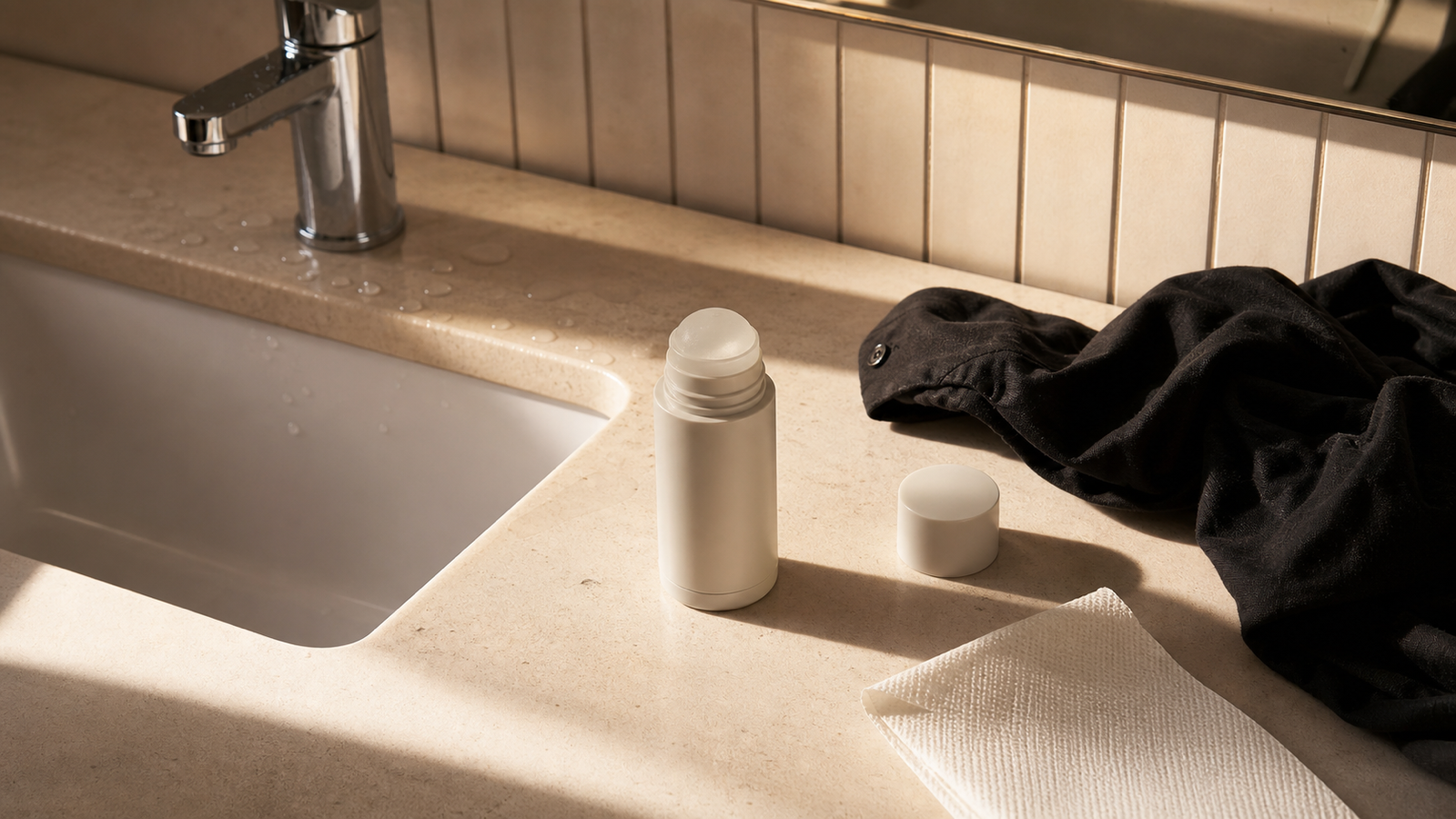
The midday swipe has limits
You know the moment: office bathroom, gym locker room, front seat before the next thing. You are trying to make the next few hours feel handled. No shame in that.
A reapply can cover the moment, but it cannot make skin clean again. It lands on top of what the day has already built.
The FDA draws a useful line here: deodorants are cosmetic products, while antiperspirants are drugs because they are meant to reduce sweat.1 In daily life, most people use the word deodorant for everything in the drawer. The practical point is simple: a leave-on product stays with you. By lunch, it has met heat, skin, fabric, and movement.
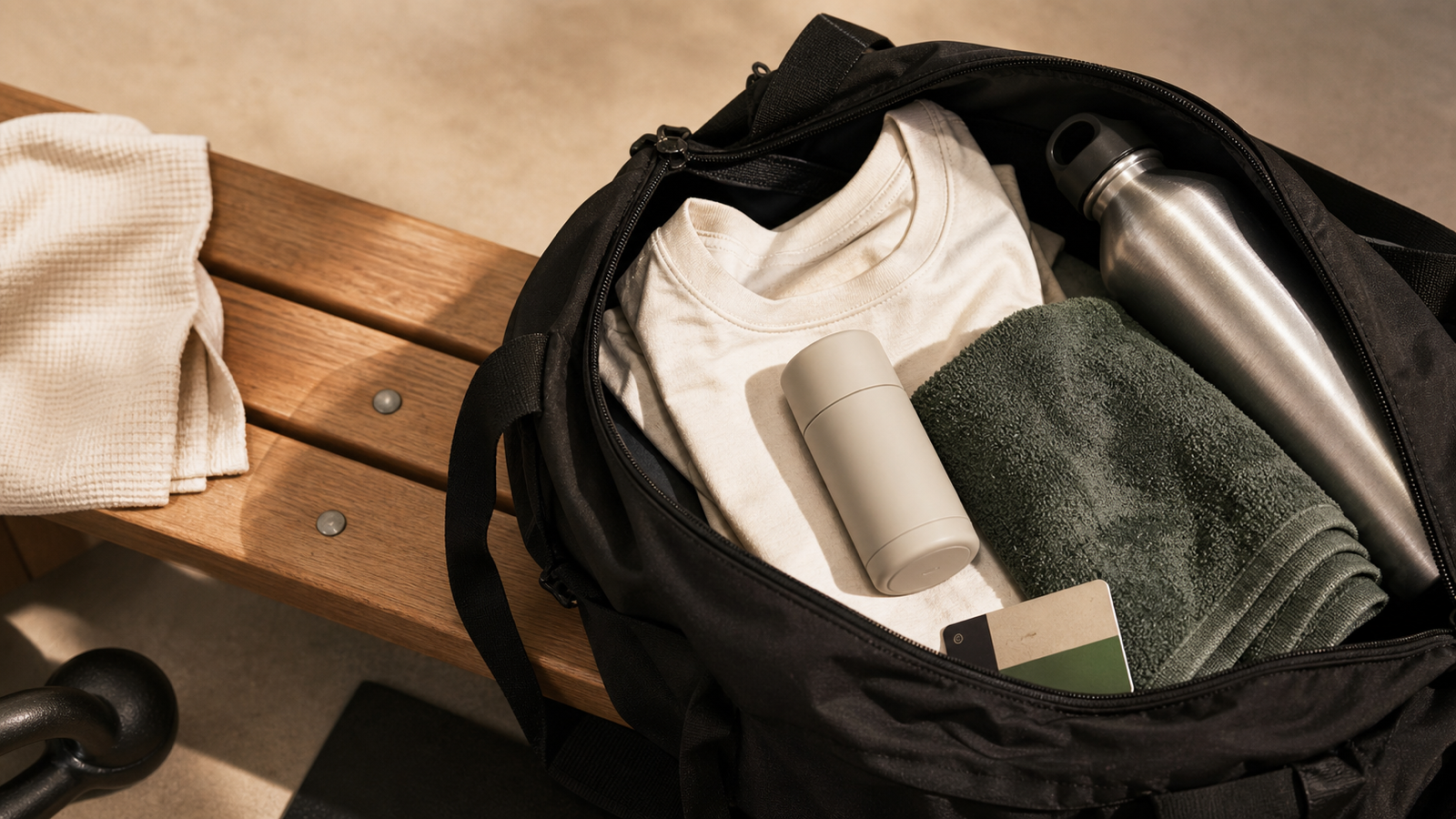
What is there by midday
Sweat by itself is only part of underarm odor. A review of axillary odor research describes the bigger picture: underarm gland secretions meet local skin microbes, and odor compounds form from that interaction.2 A shirt adds another layer. Fabric holds skin oils, sweat, fragrance, and old product in a warm fold.
That is why the second swipe can feel heavier than the first. It may bring more wax. It may bring more scent. It may drag on a shirt seam or leave a pale mark on black fabric. If the first layer has already mixed with the day, the second layer starts on top of it.
More product can miss the actual problem. Sometimes the underarm needs water. Sometimes the shirt needs a change. Sometimes yesterday's residue never fully rinsed away.
Look at the whole routine
Instead of deciding the deodorant failed, check the basics: clean skin, clean shirt, fabric type, heat, stress, and old product.
Odor gets easier to handle when it becomes a routine problem instead of a personal verdict.
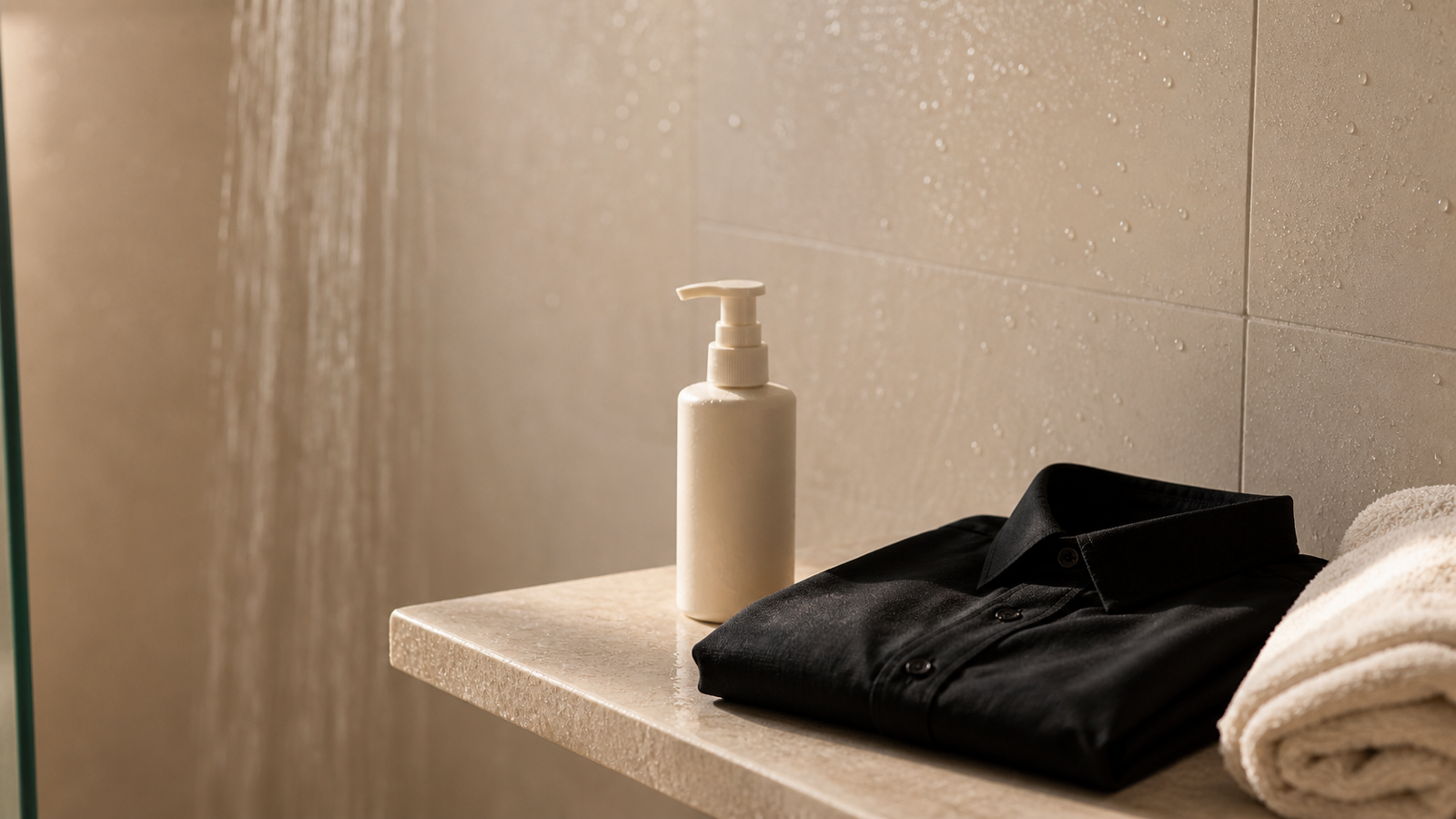
What helps
Wash the underarm. Rinse clean. Dry well. Put on a clean shirt. That is the simplest version.
If you are away from a shower, do what you can. A rinse at a sink is better than pretending another layer is magic. A fresh shirt can do more than a stronger fragrance. If all you have is the stick in your bag, use it and move on. A normal body moment deserves a practical answer.
GoodSweat brings underarm care into the shower before the day gets layered. Squeeze on, massage in, rinse clean. Odor is the enemy, not sweat. Start with clean skin, leave deodorant behind, and stop treating cover-up as the only plan.
Sources
- "Is It a Cosmetic, a Drug, or Both? (Or Is It Soap?)" U.S. Food and Drug Administration. Used for the plain regulatory distinction between deodorants as cosmetics and antiperspirants as drugs.
- James AG, Austin CJ, Cox DS, Taylor D, Calvert R. "Microbiological and biochemical origins of human axillary odour." FEMS Microbiology Ecology, 2013;83(3):527-540. Used for the basic explanation that underarm odor comes from skin secretions and local microbial chemistry, not sweat alone.