Sweat culture
Whole-body deodorant and odor anxiety
Whole-body deodorant is a real trend, but it also shows how big smell anxiety has become. A calmer routine starts by matching the problem to the right surface.
A real trend
Whole-body deodorant has become part of a bigger beauty and fragrance conversation, not a fringe shelf oddity.
The body has zones
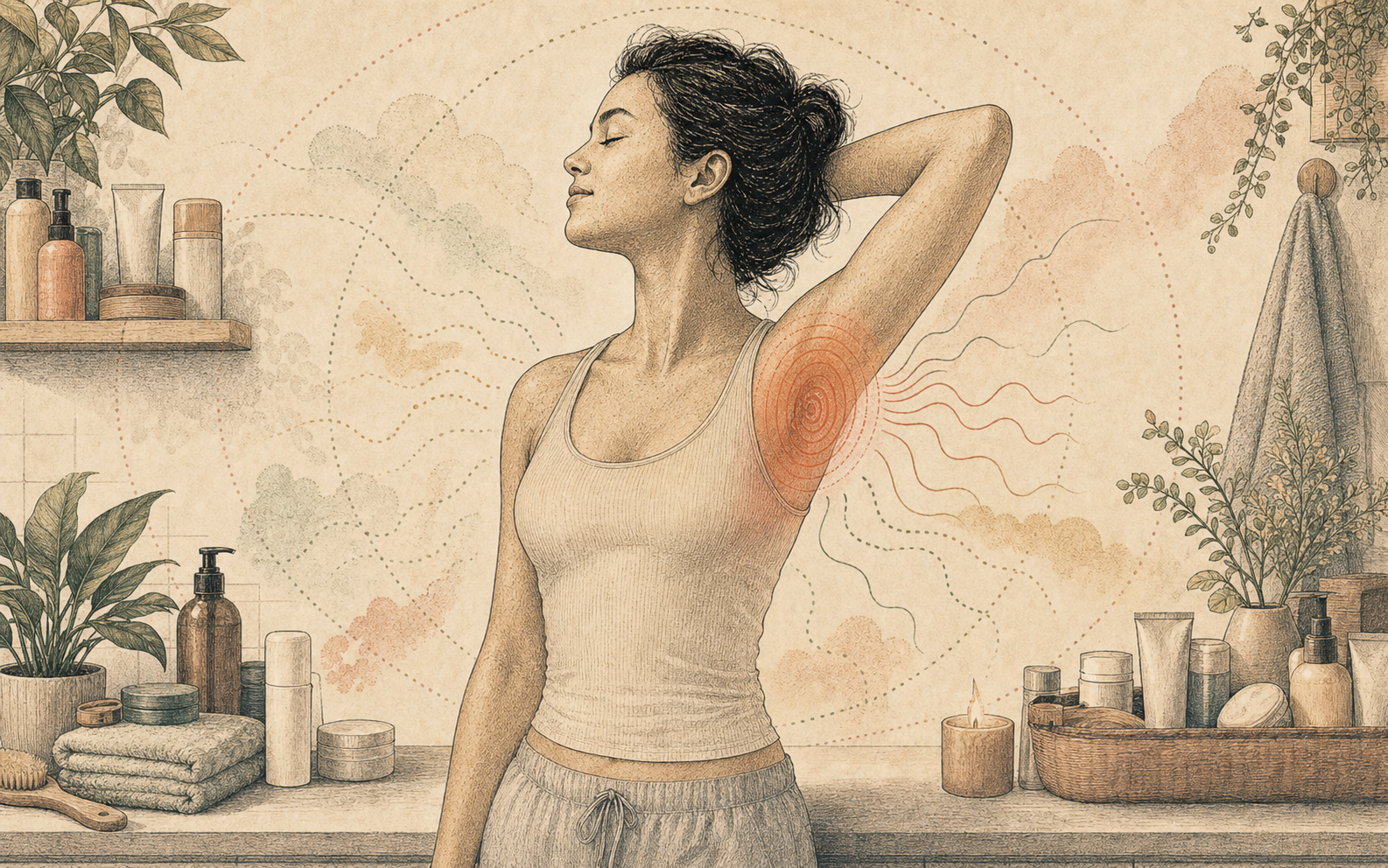
Underarms are biologically and socially specific: sweat glands, fabric, friction, hair, and odor chemistry meet there.
Specific beats anxious
If the problem is targeted underarm odor, covering more body surface is only one possible answer.
A product trend with a mood underneath
Whole-body deodorant did not appear from nowhere. It landed in offices that got crowded again, gyms with hotter locker rooms, flights that feel longer than their ticket says, and a social internet trained to notice everything. The commercial logic is easy to see: if people worry about smell, the market can offer one more surface to manage.1, 2
The emotional frame matters more than the spray. A lot of whole-body deodorant language carries the same message: the body is a liability unless every part of it is supervised. That is a heavy thing to bring into a bathroom.
The underarm has its own chemistry
Underarms are genuinely specific. They are warm, folded, hair-bearing, packed into fabric, and rich in sweat-gland and odor chemistry. James and colleagues, writing in FEMS Microbiology Ecology in 2013, describe the axilla as a specific neighborhood where natural secretions, microbes, moisture, and time can turn quiet material into noticeable odor.4 They do not describe the entire body that way.
That distinction matters. A back after a hot walk, thighs after a humid commute, and underarms after a tense meeting need different fixes, even when they all live under the word "odor." The answer might be laundry, a shower, a clinician, or choosing less fragrance in shared air.

Category language should stay honest
The FDA draws a useful line: cosmetics are generally about cleansing, beautifying, or changing appearance; drugs are intended to affect the structure or function of the body, or treat disease. Antiperspirants sit in the drug lane because they reduce sweating. Deodorants typically sit in the cosmetic lane because they deal with odor or scent.3
When the issue is underarm odor and residue, a targeted wash in the shower can feel calmer than layering more scent under a shirt.
A calmer routine stays specific
Odor anxiety loves escalation: add more product, cover more surface, reapply before anyone notices, carry the emergency stick so you never have to think about your arms. It turns a normal body function into a full-time social project.
GoodSweat is the first US shower deodorant. The old aisle gave people two familiar options: block sweat or cover odor. Another option is underarm care in the shower: squeeze on, massage in, rinse clean, then get dressed without the sticky swipe.
The body can have a smell. Clothes can need washing. Heat can make humans damp. The goal is a routine that solves the real problem without making the whole person feel like the problem.

Sources
- "You're Probably Wearing Too Much Deodorant." Cultural reporting on the rise of whole-body deodorant, odor anxiety, and the way deodorant marketing stretches the problem.
- "US Beauty Industry Sales Grow for the Fourth Consecutive Year, Circana Reports." Market context for fragrance and beauty growth that helps explain why body-scent products keep expanding.
- "Is It a Cosmetic, a Drug, or Both? (Or Is It Soap?)". FDA consumer guidance on the cosmetic/drug distinction, used here to keep deodorant and antiperspirant category language precise.
- James AG, Austin CJ, Cox DS, Taylor D, Calvert R. "Microbiological and biochemical origins of human axillary odour." FEMS Microbiology Ecology, 2013;83(3):527-540. Axillary odor science showing why underarm odor is a specific skin-chemistry problem, not a whole-body verdict.