Adrenarche field guide
Babies sweat. Body odor usually comes later.
Babies can be sweaty little citizens. The adult-style underarm odor people think of as BO usually depends on a later developmental mix: apocrine glands, skin oils, hormones, microbes, and time.
Babies do sweat
Eccrine glands help with cooling from early life. Warm rooms, layers, crying, feeding, and sleep can all make a baby sweaty.
BO is not just sweat
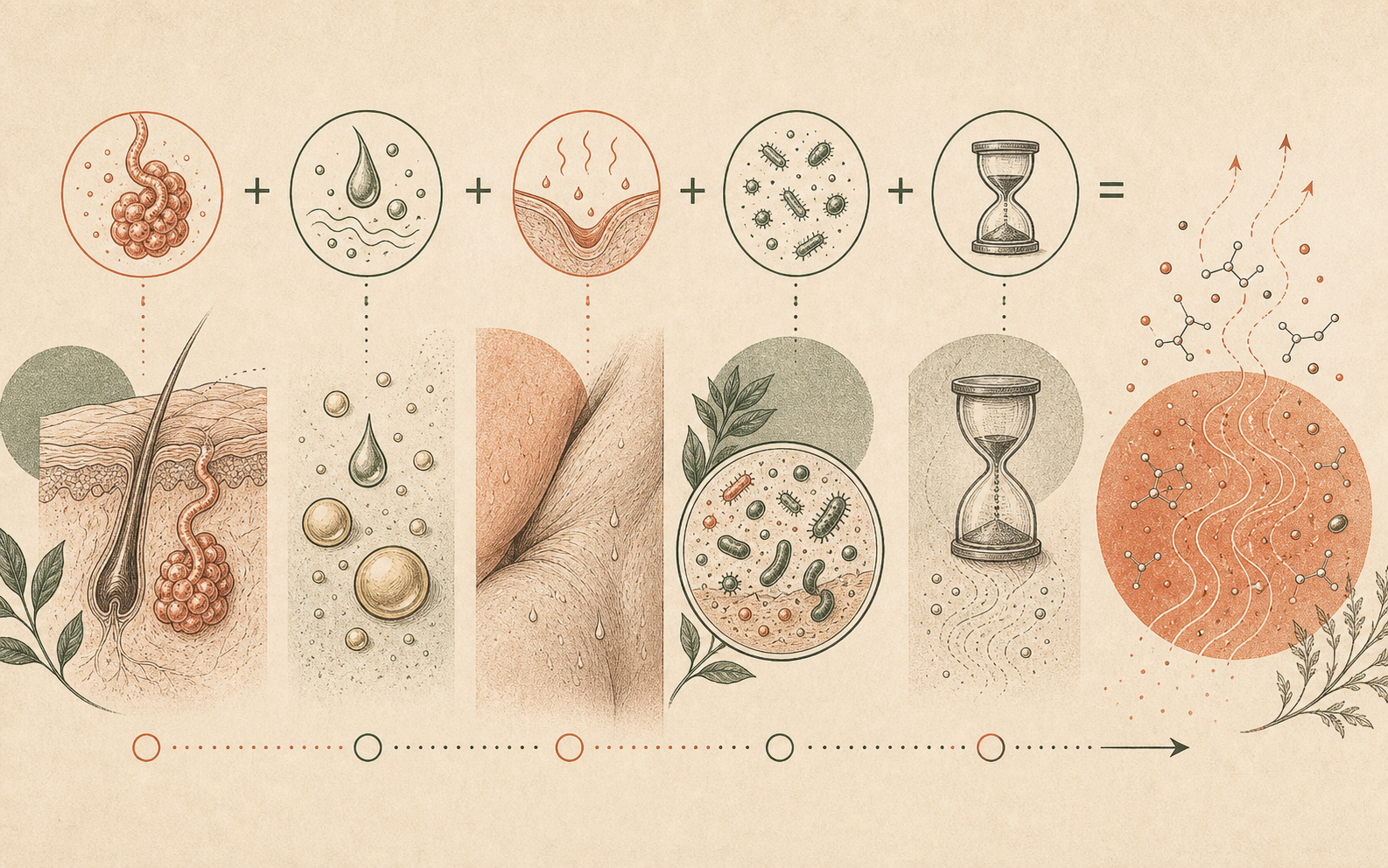
Familiar underarm odor depends on gland secretions, skin oils, microbes, fabric, warmth, and time.
Adrenarche changes the script
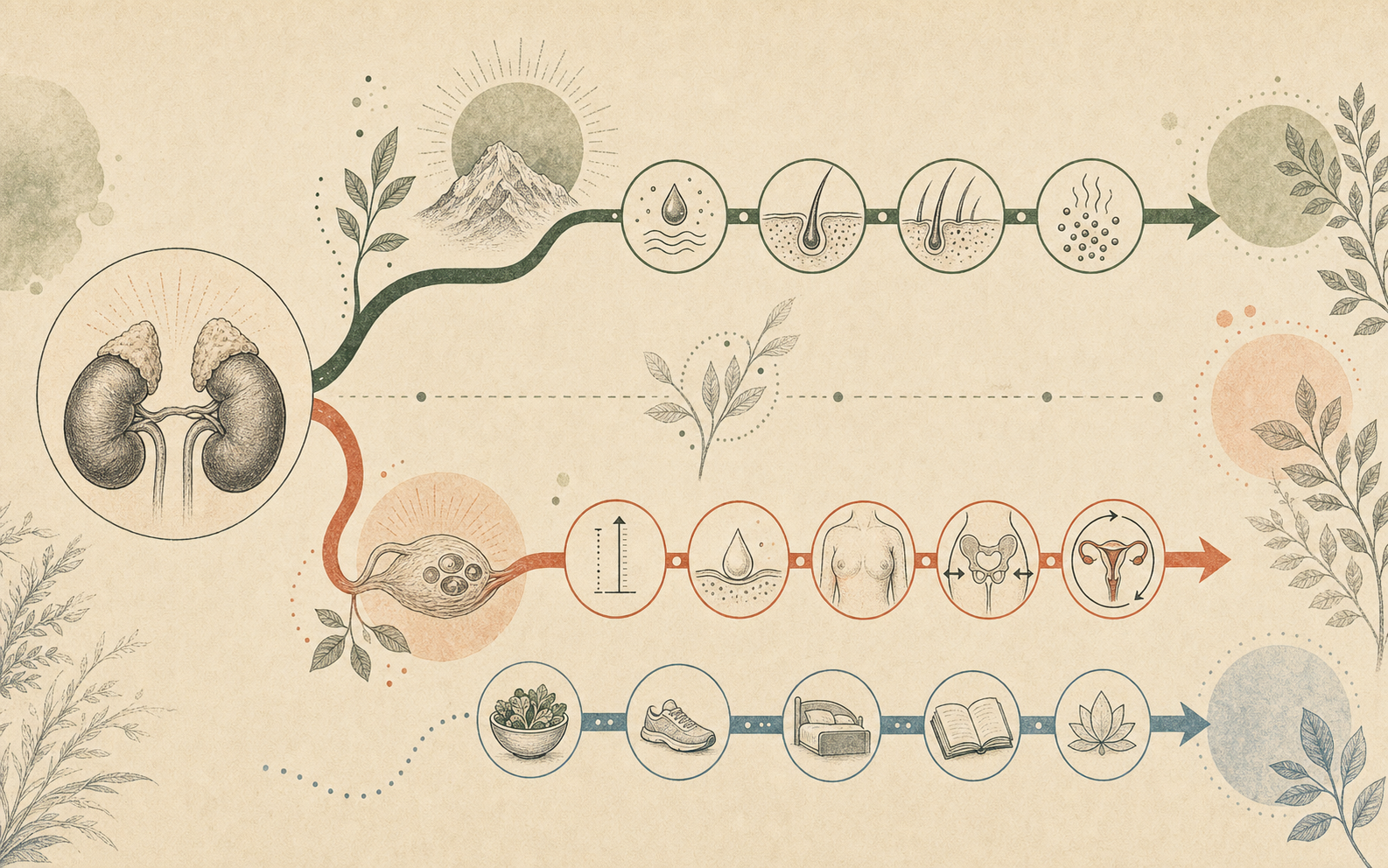
Mid-childhood adrenal hormone changes can bring oilier skin, underarm hair, acne, and adult-type odor before full puberty is obvious.
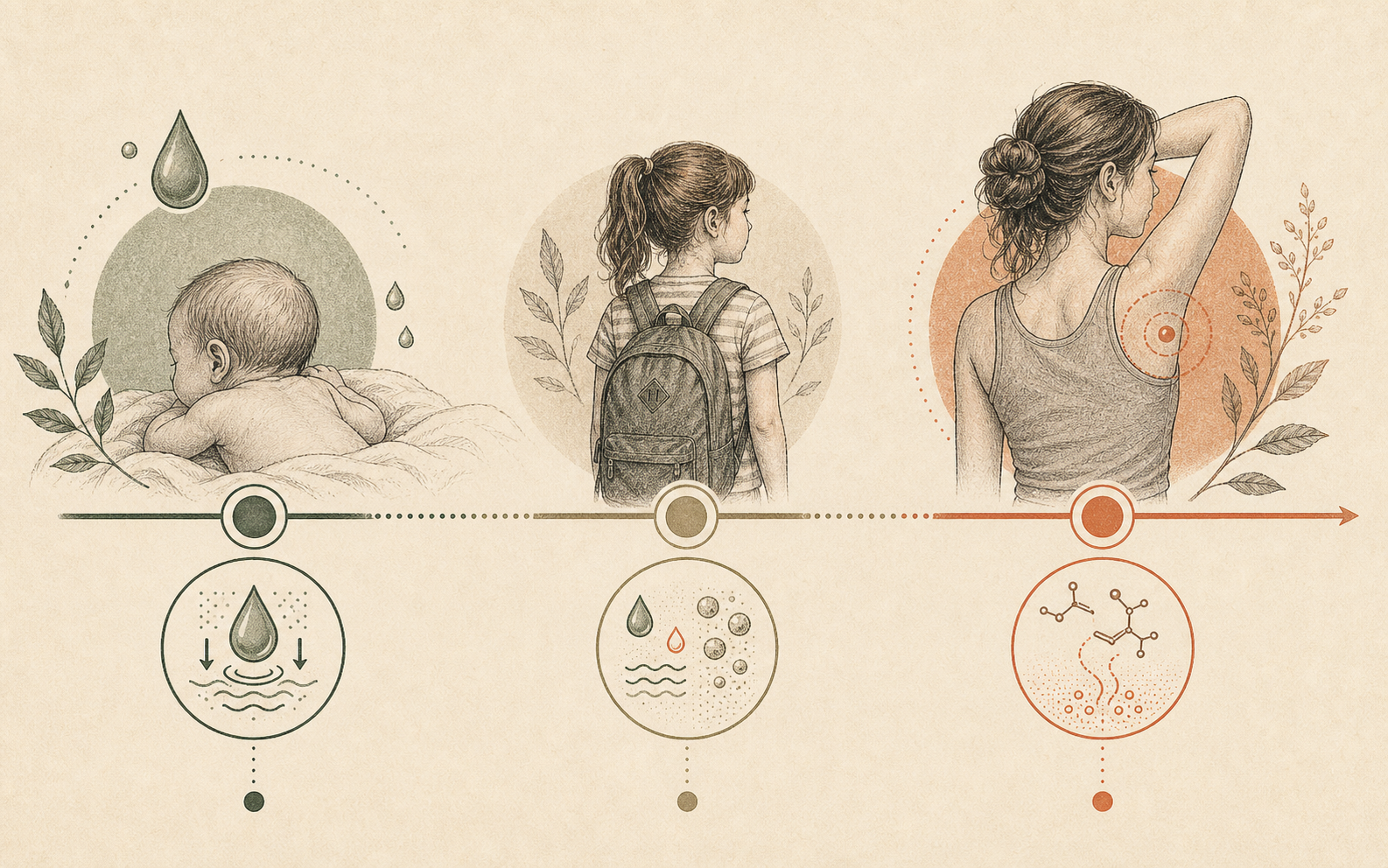
The sentence "babies have no body odor" is catchy, but the more useful version is gentler and more precise: babies sweat, babies have skin smells, and babies live in a soup of milk, laundry, diapers, lotion, spit-up, folds, naps, and weather. What they usually do not have is adult-style underarm odor.
Sweat is not the same thing as BO
The body has different sweat glands doing different jobs. Eccrine glands are widespread and central to thermoregulation. They release watery sweat onto the skin surface so evaporation can help cool the body.12
That is why a baby can wake up damp after a nap, sweat under a too-warm onesie, or get clammy while crying. None of that automatically means "body odor" in the deodorant-aisle sense. It means the skin is doing skin things.
Adult-style underarm odor is more specific. It is not a direct moral verdict from sweat. It is the result of an underarm environment changing over time.
The underarm is a special neighborhood
The axilla is warm, folded, hair-bearing, fabric-covered, and rich in glands. Apocrine glands are part of that terrain. Standard anatomy references describe apocrine glands as present early but becoming functionally active around puberty.1
Apocrine-area secretions are not the whole odor story by themselves. The smell people notice comes later, after skin microbes and underarm conditions transform natural secretions into volatile compounds.3
This is why "clean" and "odorless" are not the same claim. A child can be clean and still begin to have a new underarm smell. That is not a hygiene scandal. That is biology entering a new chapter.
Adrenarche can arrive before puberty looks obvious
Adrenarche is the adrenal glands' gradual increase in weak androgens during childhood. It is not the same as full gonadal puberty, but it can contribute to the early signs parents notice first: oilier skin, acne, pubic or underarm hair, and adult-type underarm odor.56
That is why a school-age child can suddenly need a calmer underarm conversation before anyone is ready for the full puberty talk. The body does not always send its memos in the order adults prefer.
The practical read is simple: underarm odor can be a normal developmental signal, especially in mid-childhood. If it appears very early, changes quickly, or comes with rapid growth, early pubic or underarm hair, acne, breast or genital changes, or a strange whole-body odor, it is worth asking a pediatrician. A blog should not diagnose your kid. A clinician can actually examine them.
Teenagers smell different for real reasons
Research comparing prepubertal children and teenagers has found differences in underarm microbial communities and odor profiles. A 2018 Microbiome paper studied body odor in prepubescent children and teenagers; a 2024 Communications Chemistry paper compared infant and post-pubertal odor volatile profiles.34
This is not an invitation to be weird about baby smell. It is a useful developmental fact: puberty changes the chemistry of the skin environment. The underarm gets new inputs, and the smell changes.
The first deodorant talk does not need to be weird
If a child starts to smell different, the tone matters. You are not announcing a flaw. You are adding a care step, the same way you eventually add shampoo, laundry sorting, and "please change your socks before we all perish."
GoodSweat's larger point applies here even when the product is not the point: sweat is normal. Odor is explainable. Shame is optional.
Babies sweat. Kids change. Teen underarms become their own weather system. The body is allowed to grow without being treated like a problem.
Sources
- Patel BC, Treister AD, McCausland C, Lio PA, Jozsa F. "Anatomy, Skin, Sudoriferous Gland." StatPearls, NCBI Bookshelf. Anatomy support for eccrine and apocrine glands, including puberty activation and odor basics.
- Cui CY, Schlessinger D. "Eccrine sweat gland development and sweat secretion." Experimental Dermatology, 2015. Supports the section on eccrine sweat gland development and cooling function.
- Lam TH, Verzotto D, Brahma P, et al. "Understanding the microbial basis of body odor in pre-pubescent children and teenagers." Microbiome, 2018. Compares underarm odor and microbiome differences across children and teenagers.
- Owsienko D, Schultze P, Loos HM. "Body odor samples from infants and post-pubertal children differ in their volatile profiles." Communications Chemistry, 2024. Adds volatile-profile evidence for developmental odor differences.
- Rosenfield RL. "Normal and Premature Adrenarche." Endocrine Reviews, 2021. Background on adrenarche, adrenal androgens, and related developmental signs.
- HealthyChildren.org / American Academy of Pediatrics. "Premature Adrenarche: Information for Parents." Parent-facing guidance on early body odor and when to talk with a pediatrician.