Founder note
I quit deodorant six years ago
What surprised me was how normal life stayed once underarm care moved into the shower.
What changed
Daily underarm care moved from a leave-on stick after the shower to a shower deodorant inside it.
What stayed
Heat, stress, travel, workouts, and normal scent. Sweat stayed.
What got clearer
Deodorant is a cover-up you carry into the day. Underarm care can finish in the shower instead, before the shirt goes on.
The reason was ordinary: a bathroom routine I had followed for years stopped making sense.
The drawer changed first
For years the morning sequence was automatic: shower, towel off, put something on the underarms, get dressed, hope the product and the day worked out. It was so normal that I had stopped noticing it.
A leave-on stick asks a lot of a small patch of skin. It sits there under fabric, carrying wax, fragrance, residue, and the possibility of reapplying later. Some days that is background noise. Some days it is hard to ignore.
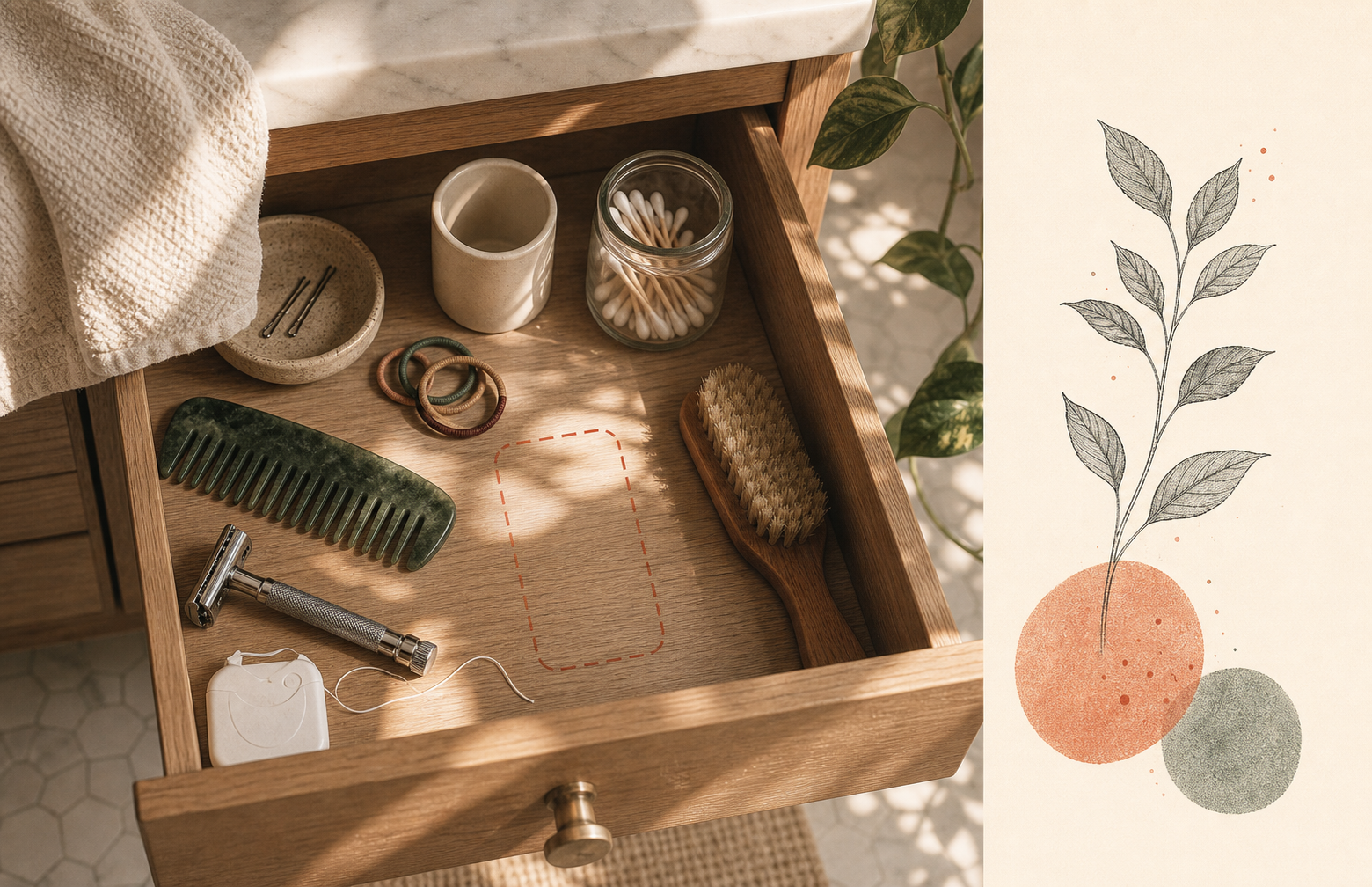
When the deodorant stopped, the first change was practical. The drawer had more room in it.
Sweat was never the thing I wanted to quit
I still sweat in heat and when I work out, and I still get the very specific underarm weather that shows up before a stressful conversation. None of that is a failure.
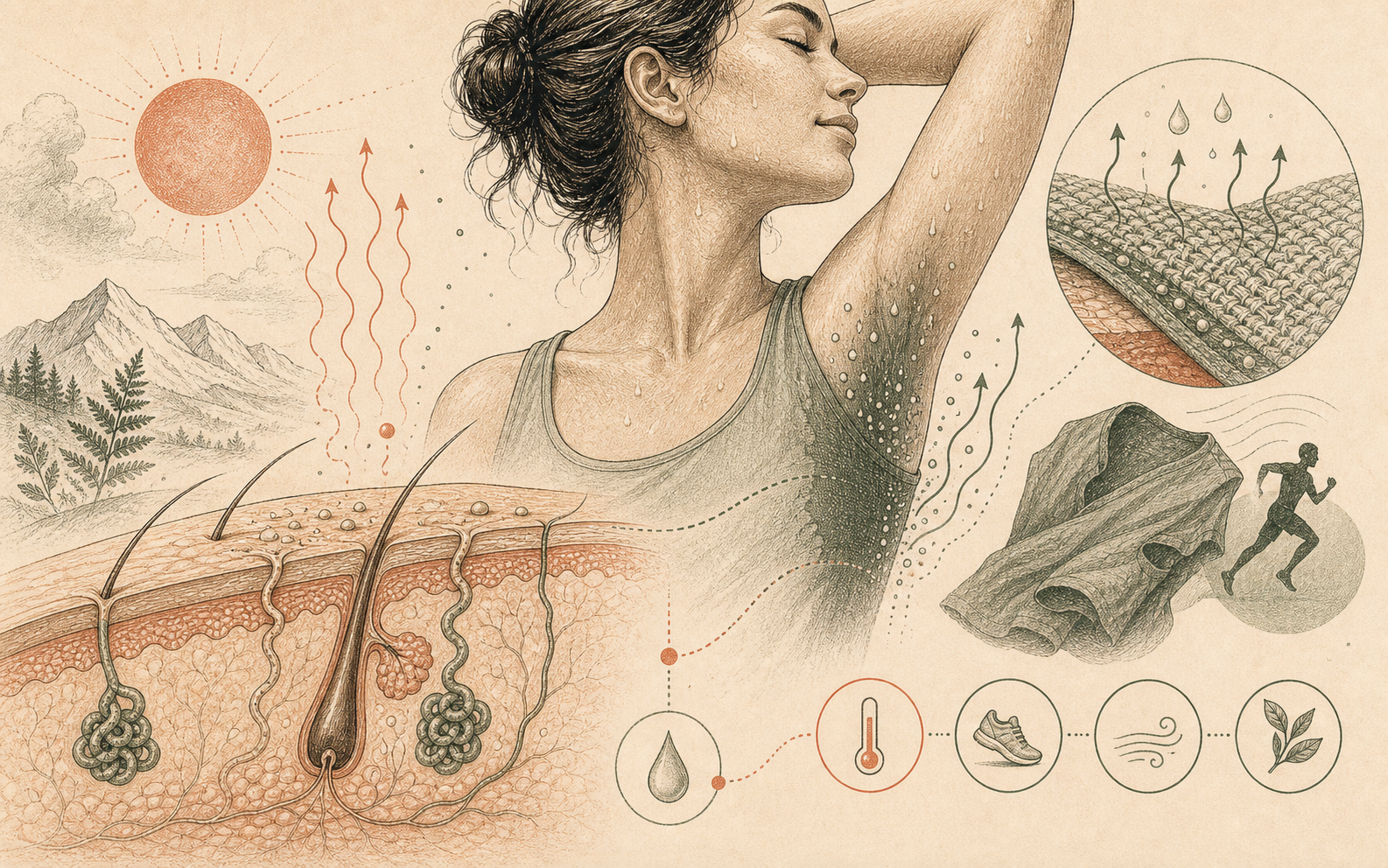
Eccrine sweating helps the body manage heat. Underarm odor is a more complicated chemistry story involving gland secretions, skin microbes, time, and fabric.34 Once that lands, the old "stop or cover the sweat" bargain starts to feel crude.
Most of us were sold a version of underarm care that treats sweat like something to hide. Odor needs attention, but the answer can be something other than a leave-on layer.
The timing changed
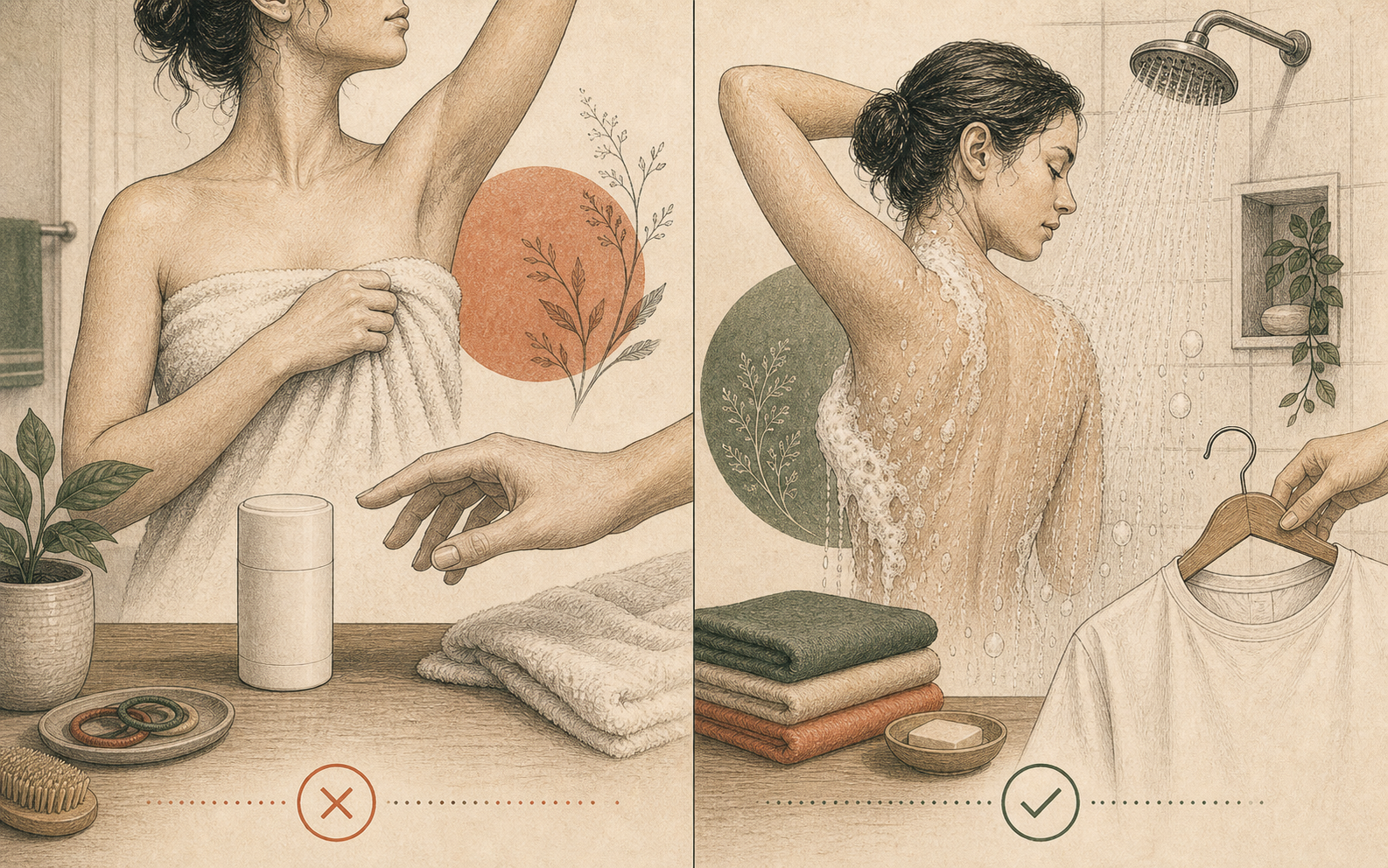
Instead of adding a leave-on layer after the shower, underarm care moved into the shower: cleanse, wait a beat, rinse, get dressed.
That sounds small because it is small. Good routines usually are. They do less, and the day starts with one fewer negotiation.
The contradiction is simple. If the underarm is the area you are trying to care for, it makes sense to clean it directly while rinsing is already happening.
What changed in daily life
Less residue. Less scent collision. No more standing in front of the drawer wondering if today's stick would mark a shirt by lunch. The post-shower negotiation went away too: the body was clean, and underarm care was already finished.
I do not want to overstate it. There was no magic loophole. I found a sequence that made more sense, and then spent years trying to understand why it felt so obvious once I had done it.
That curiosity turned into GoodSweat.
How to talk about it honestly
GoodSweat is a shower deodorant. The phrase is deliberately plain.
In the U.S., intended use shapes whether a product is treated as a cosmetic, a drug, or both.1 Antiperspirants are OTC drug products because their job is to reduce perspiration.2 Deodorants are generally leave-on products built around scent and odor masking. GoodSweat sits apart from both.
The vocabulary stays cosmetic on purpose. No medical posture, no promise that the body will stop being a body. Squeeze on, massage in, rinse clean, then get dressed without the sticky swipe.
I kept caring. I quit the cover-up.
Sources
- FDA. "Is It a Cosmetic, a Drug, or Both? (Or Is It Soap?)." Explains how intended use and product language shape cosmetic versus drug status.
- Electronic Code of Federal Regulations. "21 CFR Part 350 — Antiperspirant Drug Products for Over-the-Counter Human Use." Provides the U.S. antiperspirant drug-category frame.
- Patel BC, Treister AD, McCausland C, Lio PA, Jozsa F. "Anatomy, Skin, Sudoriferous Gland." StatPearls, NCBI Bookshelf. Background on eccrine and apocrine glands and normal sweat physiology.
- James AG, Austin CJ, Cox DS, Taylor D, Calvert R. "Microbiological and biochemical origins of human axillary odour." FEMS Microbiology Ecology, 2013. Explains why underarm odor is downstream of skin chemistry, not simply sweat itself.