A week after I stopped using deodorant, I forgot I had stopped. That is the whole essay, more or less. The rest is how it happened.
Six years ago I was a regular guy with regular underarms and a deodorant stick in the bathroom drawer, because that is where everyone keeps the deodorant stick. I had no interest in body odor as a topic. I had never once questioned the stick. It was just there, the way a toothbrush is there, a piece of the bathroom I had never thought to examine.
Then I had too many friends in a hot tub. The details are unflattering and not very important. What matters is that I came out of it with irritated, inflamed follicles under my arms, and a doctor's appointment.
The advice was almost boringly simple. Wash the area properly in the shower with a gentle skin cleanser, and pause the deodorant for a week to let the skin settle. I did exactly that. The irritation cleared in a few days. But the part I keep coming back to is the second thing the doctor said, the throwaway part: pause the deodorant. Because I paused it, and then the week ended, and I genuinely forgot to start again.
The stick was furniture.
Here is what surprised me. Nothing happened. No one said anything. The people I would trust to tell me the truth, my wife first among them, did not start leaving the room. The private little check you do before you hug someone in summer came back clean. I kept waiting for the consequence, and it never arrived.
What I slowly understood is that I had confused two different things my whole adult life. I thought I was clean because I put on deodorant. I was actually clean because I showered, and the deodorant was a separate layer I added on top out of habit and a vague sense of obligation. Remove the layer and the clean was still there underneath.
That reframed the stick for me. It stopped looking like hygiene and started looking like furniture I had inherited rather than chosen. A thing that came with the house. Useful to some people, sure. But not, it turned out, load-bearing for me.
And the more attention I paid, the more I noticed I had quietly started to like sweat again. Not as an idea, physically. The clean prickle under a shirt on a hot platform. The salt line after a run. The plain relief of cooling down. That is the body doing exactly what it evolved to do, and I had spent years treating it like a problem to be sealed off before breakfast.
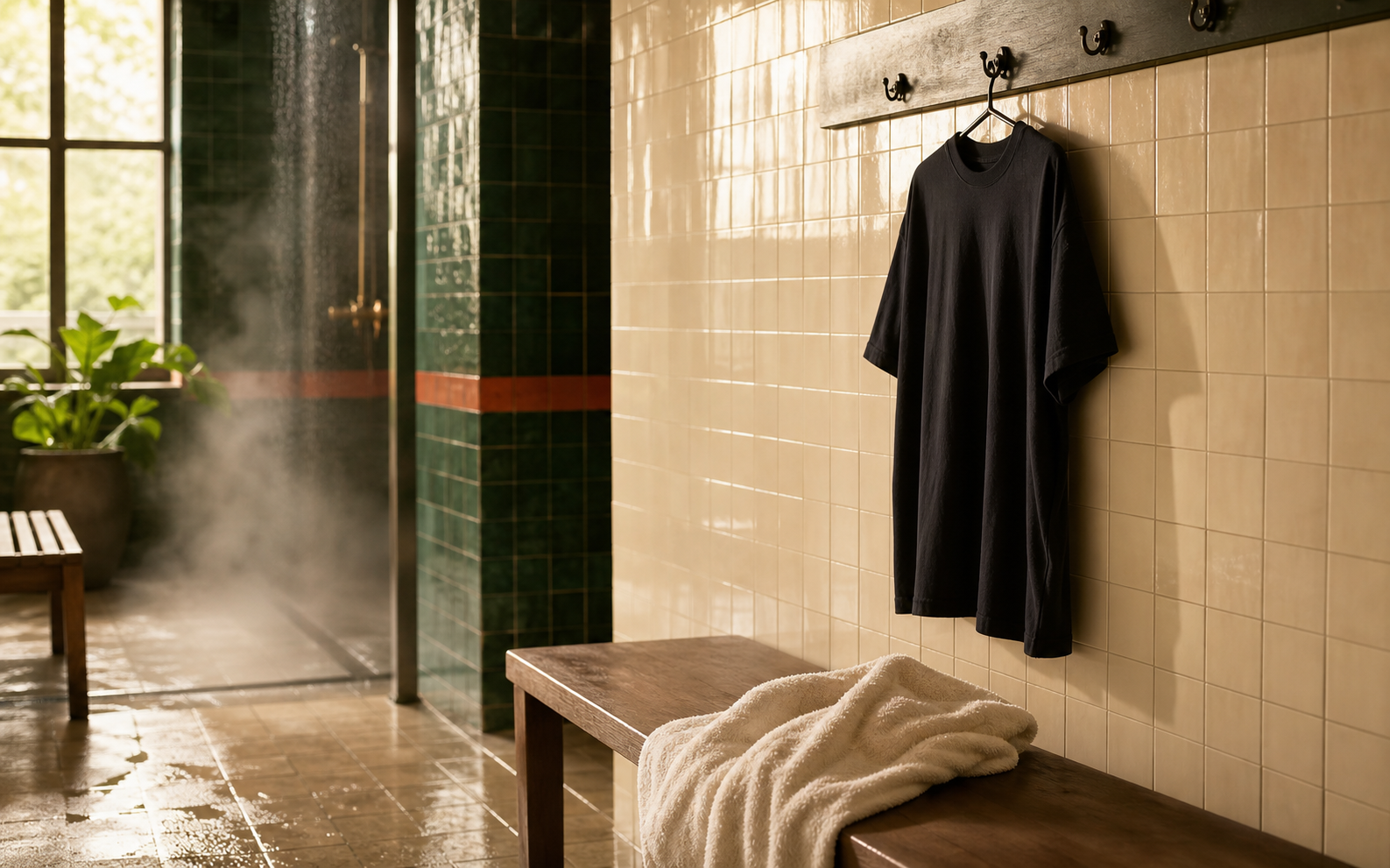
I never wanted to smell like nothing. I wanted to stop smelling like I was hiding something.
The shower made more sense.
For my whole life, underarm care had happened after the cleaning was done. Shower, towel off, then coat the skin in a stick or a gel and head out, half-tracking all day whether the fragrance clashed with the shirt and whether the inside of the sleeve was going chalky.
Moving the care into the shower flipped that order around. You wash the underarms where you are already standing under water. You give the cream a moment. You rinse it away with everything else. Then you step out genuinely clean, and the day puts its own scent on you, the honest one: soap, skin, coffee, whatever you chose to wear, the city you walked through.
What you skip is the entire afternoon negotiation. No noon reapplication with your shirt half off in an office bathroom. No gel that manages to feel wet and waxy at once. No film sitting on the skin until laundry day. The job gets done and then it is finished, which is what I want from most things in a bathroom.
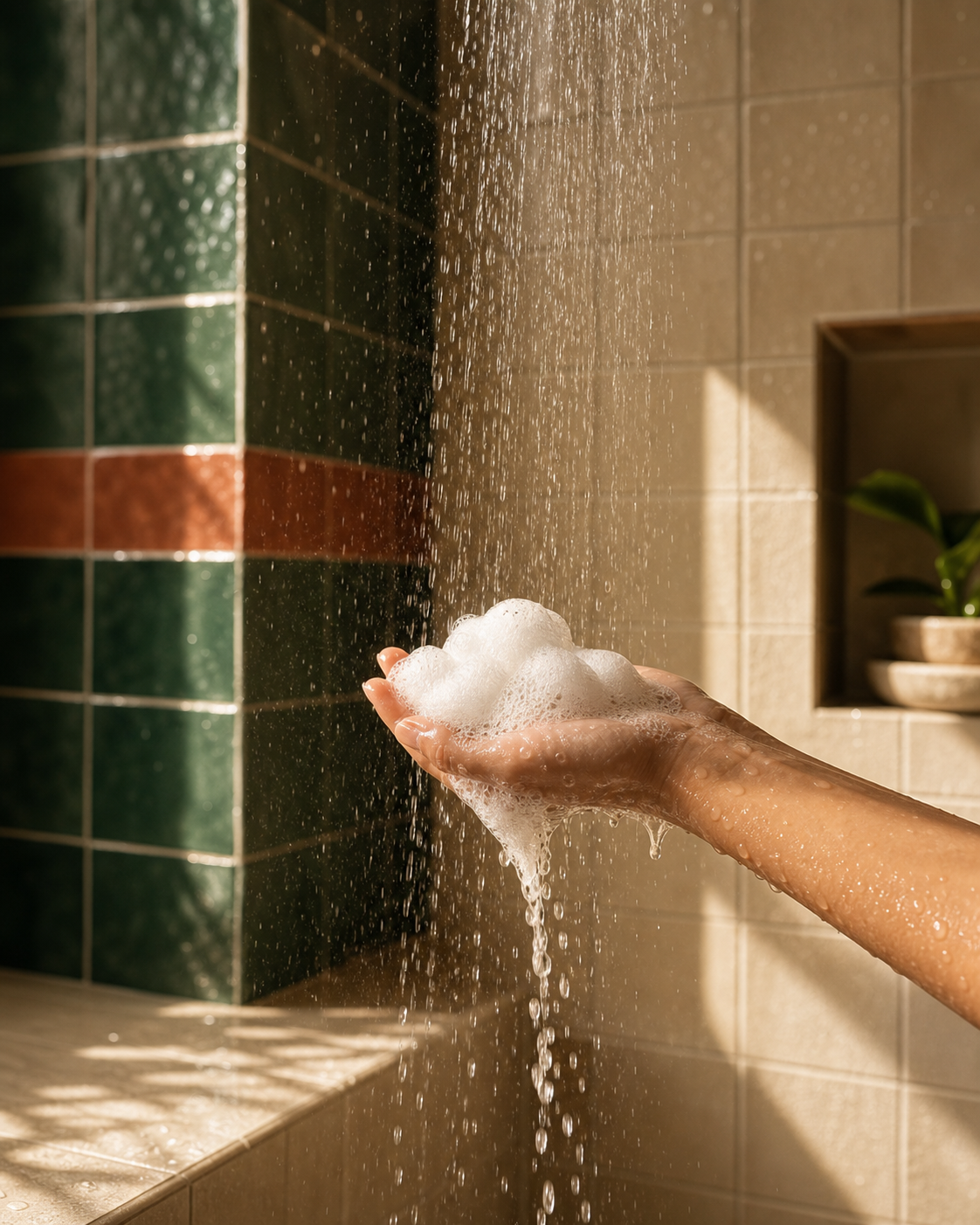
Once you stop leaving a product on your skin every morning, you start seeing the old compromises everywhere. The dress shirt with the pale crescents. The black tee with the dusty hem inside the sleeve. The fragrance cloud that walks into the meeting a beat before you do. None of that is the price of being clean. It is just the price of the stick.
Then the week became six years.
I did not set out to run a six-year experiment. It stopped being an experiment somewhere in the first few months, when it quietly turned into a bathroom habit, then a travel habit, then a laundry habit, then just the way I live.
It came with me everywhere. The routine has now been through airports and gyms, summer in four continents, the US and Japan and Europe and South America, bad coffee and good dinners, the nervous sweat before a meeting that matters and the honest sweat of a long walk when the weather turns personal. My wife watched all of it from up close and dropped her deodorant too, which is the only peer review I really cared about.

Six years cannot stand in for a clinical study, and I am not going to pretend it does. But it includes all the parts a study leaves out. The lazy weeks. The rushed mornings. The travel days where you would forgive yourself for cutting corners. Every version of me who forgot the careful instructions I would have written for someone else. It survived all of that, and the punchline of the whole stretch is small and a little funny: the sweat was never the thing that needed all that apology around it.
Why I went looking for a better ingredient.
At some point the routine got good enough that I wanted to understand it instead of just trusting it. So I left tech and spent a long stretch in research mode: testing formulas, reading the literature, sitting down with clinicians and formulators and asking a lot of questions about skin and odor.
Two things came out of that. The first is that odor at the underarm is chemistry, not character. Sweat itself is largely odorless when it arrives. The smell shows up later, when ordinary skin microbes break down compounds in apocrine sweat. Reviews of axillary odor describe exactly this hand-off, naming the bacteria that do the converting. Odor is the thing worth addressing. Sweat is just sweat.
The second is that I found the ingredient I wanted to build around, and its story is better than fiction. In the early 1980s, American chemists at the Sterling-Winthrop Research Institute invented a gentle, well-tolerated molecule called octenidine. A German company in Hamburg, Schülke & Mayr, licensed it and made it a fixture of European pharmacies for the next thirty-plus years. It is, in other words, an American molecule with a long European track record, and almost no profile back home. Bringing it back felt like the right shape for the whole project.
What I built.
GoodSweat is the version of my six-year routine that belongs on a shelf you can buy from. It is a shower deodorant: octenidine, paired with odor-binding minerals and a couple of soothing ingredients so the cream is kind to skin. Built for underarms and an ordinary morning, not for a hospital. You massage it in for about a minute in the shower, rinse it clean, and get dressed without the sticky swipe.
I want to be careful about what it is and is not, because the restraint is the whole point. GoodSweat is a cosmetic, not a drug. It does not try to shut down your sweat glands the way an antiperspirant does; that is a different, regulated category entirely, and it was never what I was after. What I wanted was simpler. A genuinely better way to get clean at the underarm, so the layer on top can just go away.
So it stays modest on purpose, because the idea underneath it is the ambitious part. You can respect what sweat is for, care about staying fresh, and still close the drawer where the stick used to live. For six years now I have, and I have not missed it once.
That is the permission I am really offering, more than a product. The stick was never the only way to be a clean person. It was just the only thing on the shelf.
Sources
- FDA, “FDA Authority Over Cosmetics: How Cosmetics Are Not FDA-Approved, but Are FDA-Regulated.” How the FDA describes cosmetics, including deodorants, and how a product's intended use sets its category. The basis for placing GoodSweat in the cosmetic lane.
- 21 CFR Part 350, “Antiperspirant Drug Products for Over-the-Counter Human Use.” Defines the antiperspirant category as drug products that reduce perspiration. The line GoodSweat deliberately does not cross.
- Patel BC, Treister AD, McCausland C, Lio PA, Jozsa F. “Anatomy, Skin, Sudoriferous Gland.” StatPearls, NCBI Bookshelf. Explains eccrine and apocrine sweat glands and sweat's role in cooling the body.
- Baker LB. “Physiology of sweat gland function: The roles of sweating and sweat composition in human health.” Temperature, 2019. Broader context on normal sweat physiology and composition.
- James AG, Austin CJ, Cox DS, Taylor D, Calvert R. “Microbiological and biochemical origins of human axillary odour.” FEMS Microbiology Ecology, 2013. Reviews the microbiology behind underarm odor, including the bacteria that convert odorless sweat compounds into the smell we notice.
- Köck R, Denkel L, Feßler AT, et al. “Clinical Evidence for the Use of Octenidine Dihydrochloride.” Pathogens, 2023. European literature context for octenidine as a molecule.