Parent field guide
The first deodorant talk should not be weird
New underarm odor in a kid is not a character flaw, a parenting failure, or proof that childhood ended overnight. It is usually a body-literacy moment: glands waking up, skin microbes doing normal skin-microbe things, and a child needing a routine that feels practical instead of embarrassing.
Odor is chemistry
Sweat, skin oils, gland changes, clothing, and ordinary skin microbes can create noticeable body odor.
Timing matters
Underarm odor can show up around adrenarche, sometimes before more visible puberty signs. Early or rapid changes deserve a pediatrician's input.
Make it boring
The best first talk is practical: bodies change, showers help, clean shirts help, and underarms can get their own simple step.
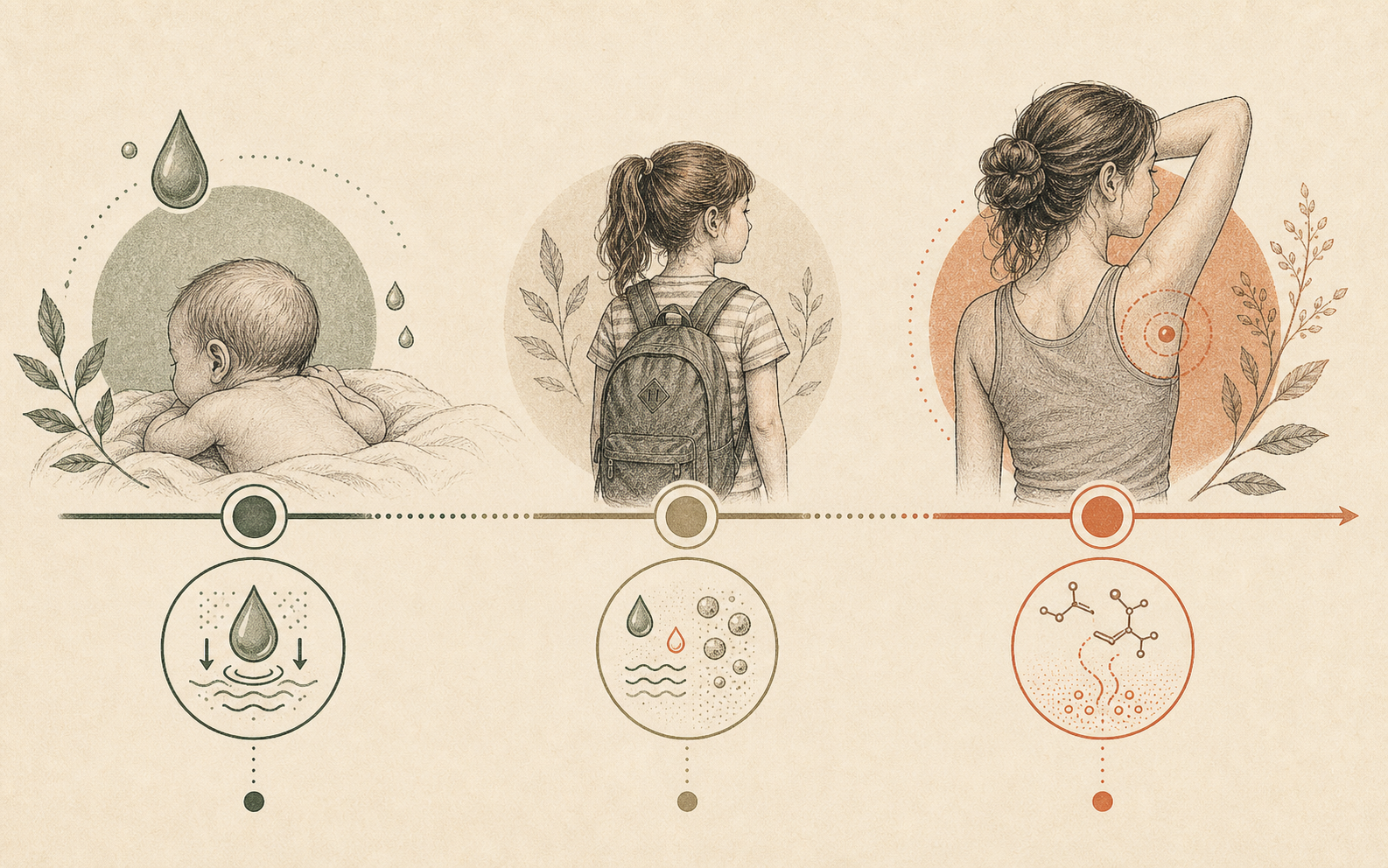
The first time a parent notices underarm odor on a child, the room can get weird fast. Usually the odor is not dramatic. The weirdness comes from everything adults accidentally attach to it: embarrassment, panic, jokes, a rushed purchase, a whispered warning in the deodorant aisle.
Start with the kid, not the smell
Children do not need a shame spiral. They need a calm sentence: "Your body is starting to make a new kind of smell sometimes. That's normal for lots of kids. Let's make a little underarm routine."
That is the whole posture. No theatrical announcement. No pretending bodies are scentless until adulthood and then suddenly offensive. A child's first odor conversation can be as ordinary as the first conversation about brushing molars properly, washing hair after swim practice, or remembering socks.
It is not a referendum on cleanliness. It is a body changing its inputs.
Why kids can suddenly smell different
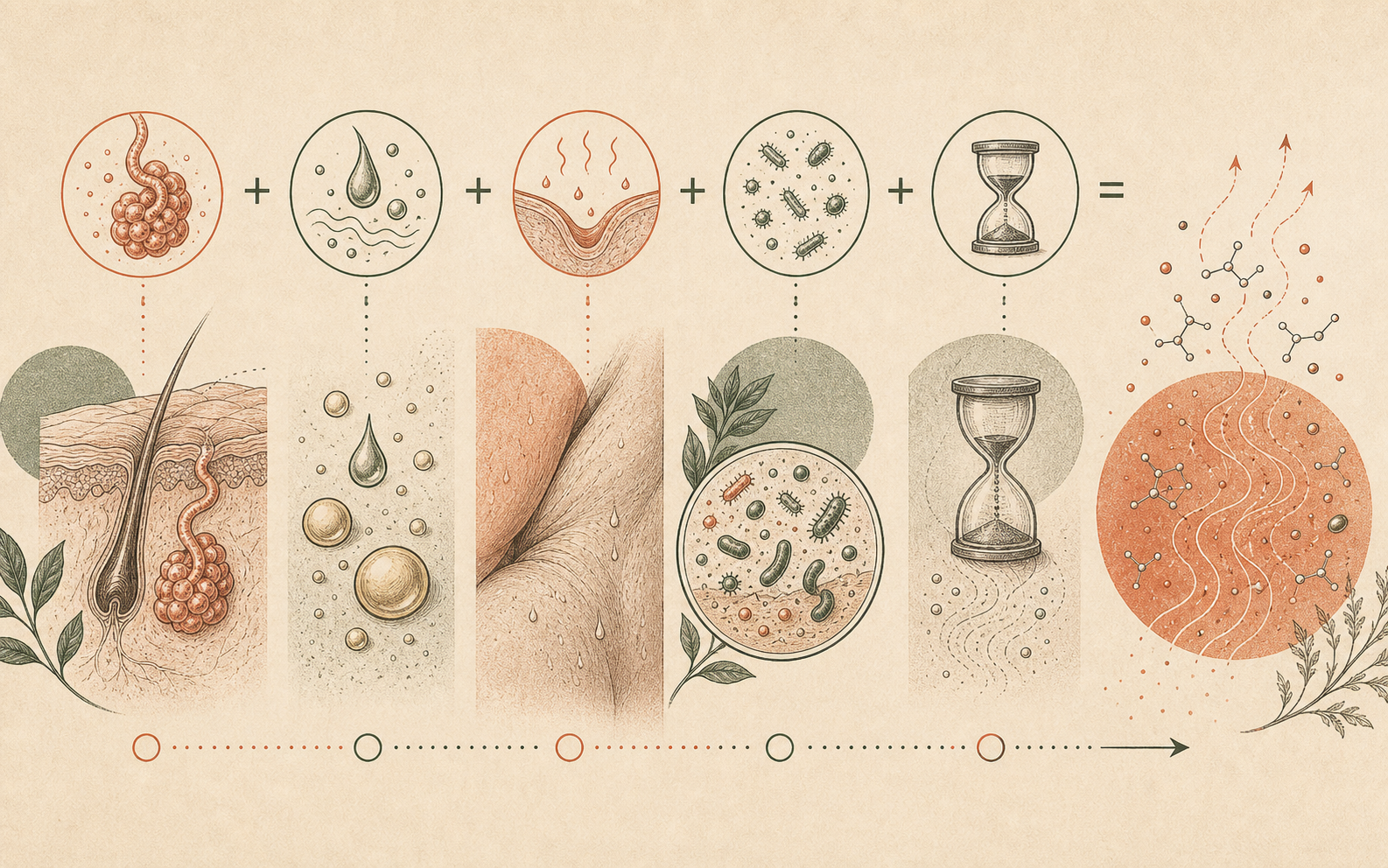
Human skin is not sterile, and it is not supposed to be. It has sweat glands, oil, folds, hair follicles, fabric contact, and resident microbes. Odor happens when that local environment changes and ordinary skin microbes interact with sweat and other secretions.3
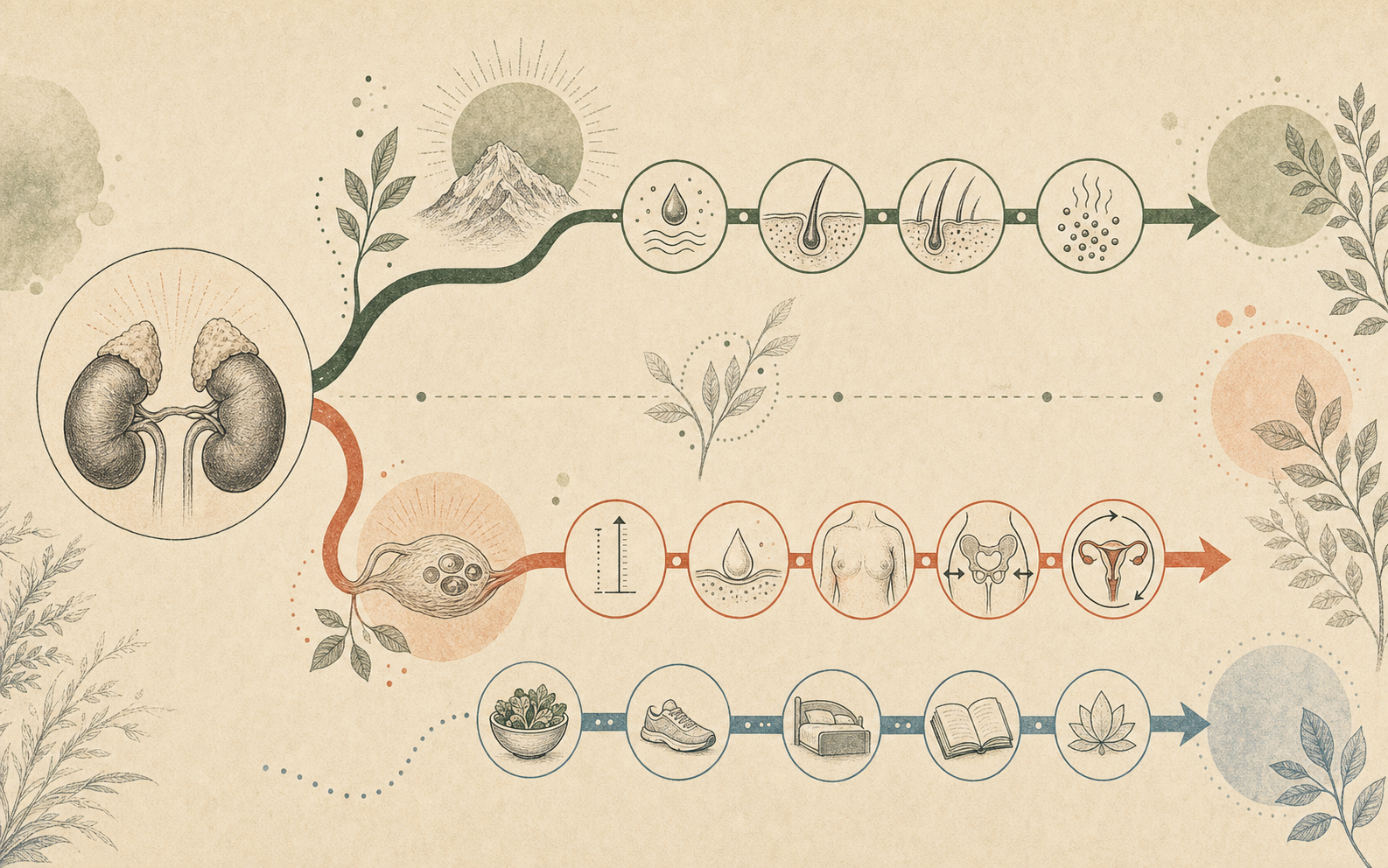
Two gland systems matter here. Eccrine glands are spread across much of the body and help cool us. Kids have been sweating this way for years; that part is not new. Apocrine-related odor is more tied to the underarm and other hair-bearing areas and becomes more noticeable around puberty-related hormone changes.2
One important word for parents is adrenarche. It is the adrenal-gland change that can bring more adult-like underarm odor, oiliness, acne, and pubic or underarm hair. It can begin before the more obvious signs people usually call puberty, such as breast development or genital enlargement.1, 2
That means a kid can smell different before they look dramatically different. The body did not skip childhood. It added a new chemistry channel.
The age question needs a calm answer
Parents search this topic because they are trying to answer two questions at once: is this normal, and do I need to call the doctor?
The honest answer is that sometimes body odor is part of expected development, and sometimes timing or context deserves medical guidance.
The American Academy of Pediatrics and Pediatric Endocrine Society describe premature adrenarche as a common reason children are referred for signs of early puberty. They name adult-type underarm odor and pubic or underarm hair in girls younger than 8 or boys younger than 9 as features worth understanding, especially when they occur without breast development in girls or genital enlargement in boys.1
So the parent-friendly rule is not "panic if your kid smells." It is this: if odor appears very early, arrives with rapid body changes, comes with pubic or underarm hair before the usual age thresholds, is paired with acne, growth acceleration, breast development, genital enlargement, pain, rash, discharge, a very unusual scent, or significant distress, ask your pediatrician.4
A pediatrician can look at growth patterns, timing, and the full picture instead of making the underarm do all the diagnostic work.
Odor is not a cleanliness report card
One of the kindest things adults can do is separate odor from morality.
A child can bathe and still smell after soccer. A child can wear a clean shirt and still smell different by the end of a hot school day. A child can be tidy, loved, and well cared for, and their underarms can still enter a new phase.
Research on body odor in pre-pubescent children and teenagers supports the basic idea that odor is a skin ecology story, not simply "dirty kid" behavior. In one Microbiome study, researchers looked at underarm, neck, and head samples from children and teenagers and found that odor intensity related to particular microbes and metabolic pathways.3
That does not mean microbes are villains. Skin microbes are part of skin. The job is not to make a child afraid of their body. The job is to build a routine that keeps high-friction, high-sweat zones from becoming a social emergency.
Make the first routine boring
The first routine should be short, repeatable, and non-dramatic.
Start with the basics: regular bathing or showering, a real pass over the underarms, clean shirts, and laundry that actually dries all the way. After sports, camp, recess in hot weather, or a sweaty ride home, a rinse can be more useful than a lecture.
This is where the GoodSweat point of view matters, even before anyone talks about a particular product. Deodorant is usually a leave-on category. Antiperspirant is designed to reduce sweating. A rinse-off underarm cleanser is a shower step: wash the underarm area, rinse away, move on with life. The emotional distinction is useful because it keeps the conversation inside normal bathing instead of making "you need deodorant now" feel like a public identity change.
What to say without making it a thing
Try this: "Bodies start making new smells as kids grow. It happens because sweat, skin, and underarms change. It is not bad. It just means we add one new step."
Or: "After practice days, your shirt and underarms need a reset. Let's make sure the underarms get washed and the sweaty shirt goes straight to laundry."
What not to say is just as important. Do not tease. Do not announce it to siblings. Do not make the child responsible for adult discomfort. Do not load the moment with "you smell like a teenager" if that will make them feel watched in their own body.
Kids remember the emotional weather around body conversations. Make this one mild.
A parent checklist
- Notice the pattern. Is odor occasional after sweat, or persistent and unusual?
- Check the basics. Bathing, underarms, clean clothes, laundry, sports gear, and shoes all matter.
- Watch timing. Pubic or underarm hair, acne, fast growth, breast development, or genital changes may change the medical context.
- Call the pediatrician for very early, rapid, distressing, painful, rashy, persistent, very unusual, or multi-symptom changes.
- Use neutral words. "New smell" lands better than "stink."
- Give the child agency. Put the routine where they can actually use it.
The first talk sets the tone
Underarm odor is one of those tiny thresholds that can feel bigger than it is. It sits near puberty, privacy, clothes, school, sports, and the fear of being noticed. Parents can either make it charged, or they can make it manageable.
GoodSweat's point of view is simple: sweat is useful, bodies change, and odor is explainable. A kid's first deodorant talk should not be a ceremony of shame. It should be a practical handoff.
Here is the soap. Here is how underarms get washed. Here is where clean shirts live. You're good.
Sources
- American Academy of Pediatrics / Pediatric Endocrine Society. "Premature Adrenarche: Information for Parents." Parent-facing medical source for adult-type underarm odor, timing, and when early changes deserve clinician input.
- Witchel SF, Topaloglu AK. "Normal and Abnormal Puberty." Endotext, NCBI Bookshelf. Clinical endocrine background for adrenarche, gonadarche, apocrine odor, and normal variation.
- Lam TH, Verzotto D, Brahma P, et al. "Understanding the microbial basis of body odor in pre-pubescent children and teenagers." Microbiome, 2018. Academic source for body odor as skin-microbe chemistry in children and teenagers.
- HealthyChildren.org. "Precocious Puberty: When Puberty Starts Early." American Academy of Pediatrics source for early puberty context and when pediatric evaluation may be appropriate.