Body literacy
ABCC11, earwax, and underarm odor
One ABCC11 variant is linked to dry earwax and fewer common underarm odor precursors. It is useful science, not a ranking system or a hygiene shortcut.
ABCC11 matters
The gene is linked to earwax type and to the production of some underarm odor precursors.
Genes need context
Skin microbes, washing, fabric, heat, stress, and habit shape the final odor.
No ranking
Lower typical odor makes no one cleaner. Stronger odor makes no one careless.
A real gene with an easy nickname
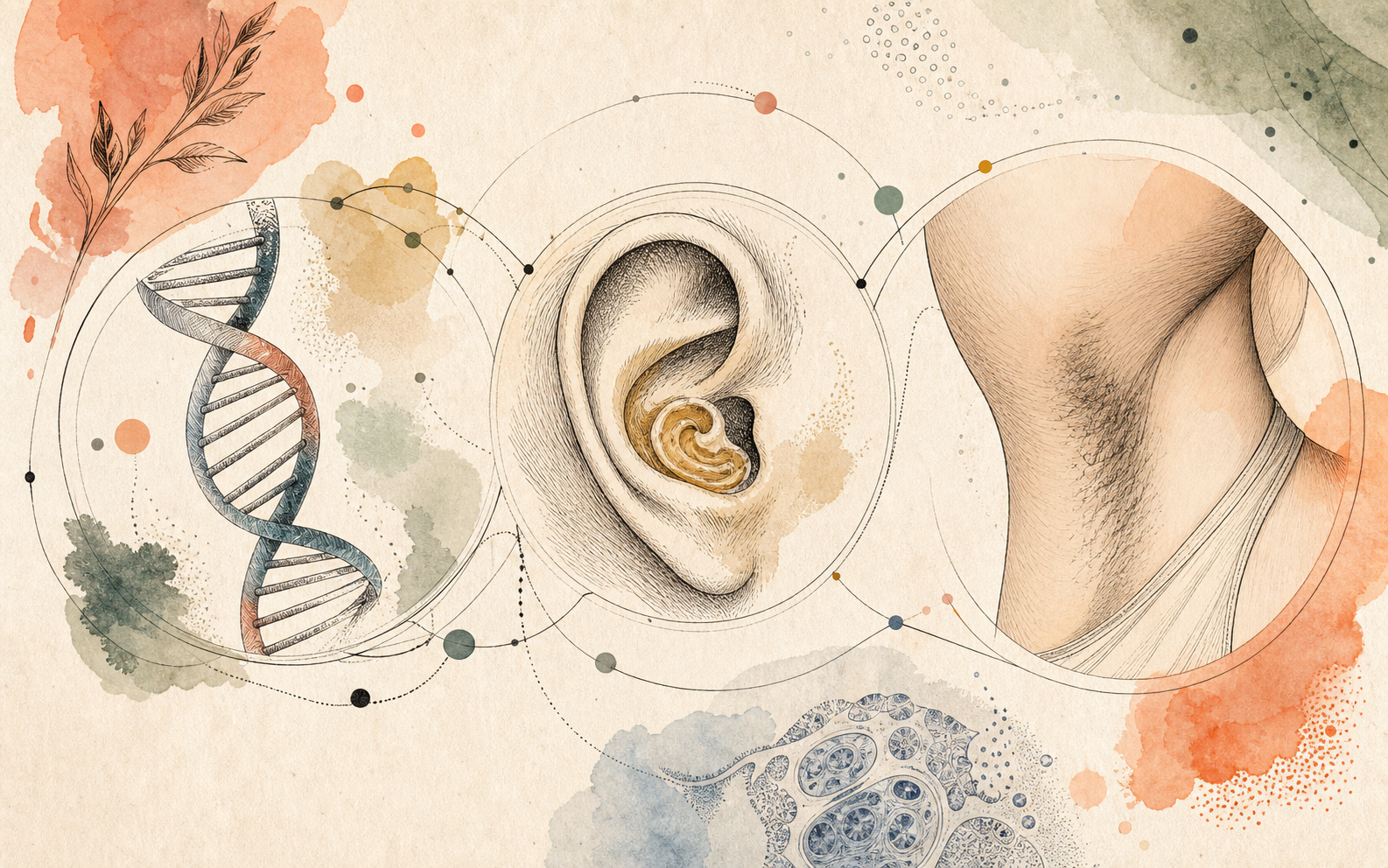
There is real science behind the idea that some people seem to need deodorant less often. The gene is ABCC11, and one common variant is linked to dry earwax and to lower production of several underarm odor precursors.1, 2, 3
Washing still matters. This simply means one familiar odor pathway has fewer raw materials. The useful takeaway is simple: bodies vary.
Bodies start with different chemistry. Some people sweat heavily and smell faintly. Others barely sweat and still notice odor late in the day. Most people also start using deodorant in middle school, long before they know anything about their own underarm chemistry.
What ABCC11 does
ABCC11 is a human gene that codes for a transporter protein. NCBI lists the full name as ATP binding cassette subfamily C member 11.1
In practical terms, ABCC11 helps move certain molecules in glandular tissues. It comes up in earwax research because earwax comes in two broad types, wet and dry. It comes up in underarm odor research because the underarm is a gland-rich, microbe-rich, fabric-covered patch of skin where small chemistry changes can become noticeable.
The variant most discussed is rs17822931. Popular articles sometimes turn it into a deodorant shortcut. That shorthand is too broad. The gene affects one part of the routine, not the whole routine. It changes whether your body produces certain secretions that skin microbes can turn into underarm odor.
Earwax led researchers there
The earwax link is well documented. In a 2006 Nature Genetics paper, Yoshiura and colleagues identified a single nucleotide polymorphism in ABCC11 as the determinant of wet versus dry earwax type.2
That finding mattered because earwax is produced by ceruminous glands, which are close cousins of apocrine glands. The underarm has apocrine glands too, so researchers looked at whether the same gene helped explain underarm odor.
Later underarm research added nuance. A 2010 Journal of Investigative Dermatology paper by Martin and colleagues found that a functional ABCC11 allele is essential in the biochemical formation of characteristic human axillary odor.3 Dry earwax and lower typical underarm odor track together because ABCC11 sits upstream of both.
Odor starts downstream
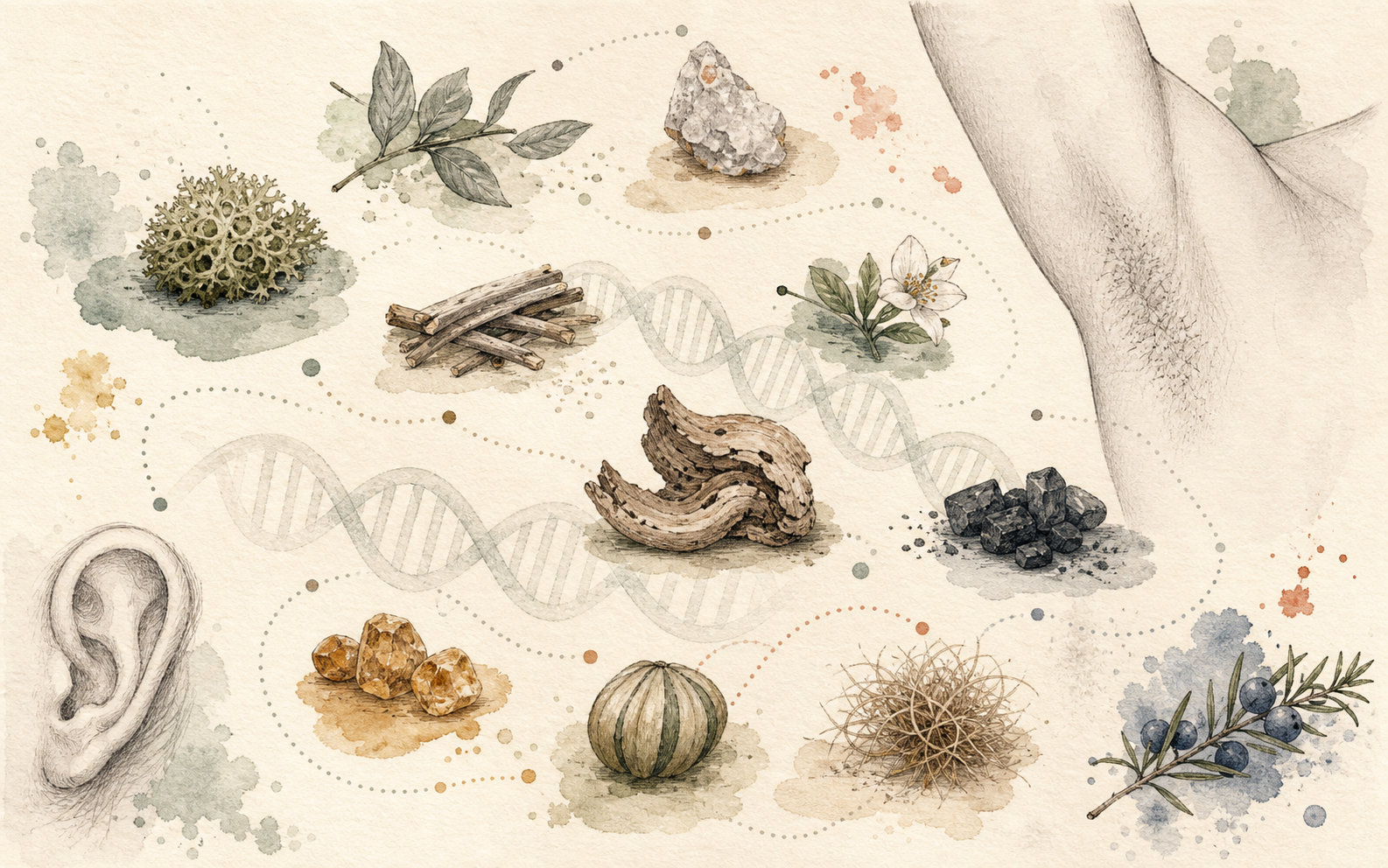
Underarm odor often starts with odorless or low-odor secretions. Skin microbes are the ones that turn those molecules into volatile compounds human noses pick up.
A 2024 Scientific Reports paper by Stevens and Roesch described the interplay between ABCC11 variants and axillary skin microbiome function, especially around pathways involved in sulfur-containing odor compounds.5 ABCC11 affects what raw materials show up in the underarm. Microbes, hair, fabric, and humidity decide what happens to them next.
Habit can outlive biology
One of the stranger findings in this literature: deodorant habits often persist even when a person's genotype predicts lower typical underarm odor.
Rodriguez and colleagues studied ABCC11 genotype and deodorant use in a large UK cohort and reported that many people with the genotype associated with lower underarm odor still used deodorant regularly.4 That makes sense if you remember middle school. Most people start because a parent buys it, a locker room gets tense, or the culture says responsible people apply a scented layer before leaving the house.
GoodSweat keeps the routine in the shower: odor is real, sweat is normal, and underarm care can be a rinse-off routine. Squeeze on, massage in, rinse clean, and get dressed without the sticky swipe.
Population patterns need care
The ABCC11 variant associated with dry earwax is more common in some populations than in others. The literature is careful about this. The internet, less so.
A population frequency cannot tell you what one person actually smells like, how often they wash, or what their laundry, climate, and diet are doing in the background.
Underarm odor varies for real biological reasons. If you barely notice it, that is one starting point. If you notice it quickly, that is another. Bodies differ. Routines are allowed to differ too.
Sources
- "ABCC11 ATP binding cassette subfamily C member 11 [Homo sapiens (human)]." NCBI Gene record with ABCC11's official name and gene summary.
- Yoshiura K, Kinoshita A, Ishida T, Ninokata A, Ishikawa T, Kaname T, et al. "A SNP in the ABCC11 gene is the determinant of human earwax type." Nature Genetics, 2006;38(3):324-330. Primary genetics paper connecting ABCC11 variation with wet and dry earwax type.
- Martin A, Saathoff M, Kuhn F, Max H, Terstegen L, Natsch A. "A functional ABCC11 allele is essential in the biochemical formation of human axillary odor." Journal of Investigative Dermatology, 2010;130(2):529-540. Primary research connecting functional ABCC11 alleles with underarm odor precursor formation.
- Rodriguez S, Steer CD, Farrow A, Golding J, Day IN. "Dependence of deodorant usage on ABCC11 genotype: scope for personalized genetics in personal hygiene." Journal of Investigative Dermatology, 2013;133(7):1760-1767. Cohort study showing how deodorant habits can persist even when genotype predicts lower typical odor.
- Stevens BR, Roesch LFW. "Interplay of human ABCC11 transporter gene variants with axillary skin microbiome functional genomics." Scientific Reports, 2024;14:28037. Recent open-access paper on ABCC11 variants and axillary microbiome function.