Body-literacy field guide
The underarm microclimate
Your underarm is warm, folded skin under fabric. Sweat glands, skin microbes, hair, friction, and time all work there, which is why odor behaves differently than it does on open skin.
Warmth matters
A fold under a shirt traps more heat and moisture than open skin.
Glands meet there
Eccrine cooling sweat and apocrine underarm secretions can both show up in the axilla.
Odor has context
Odor comes from skin chemistry, microbes, fabric, and time. It says more about local conditions than cleanliness.
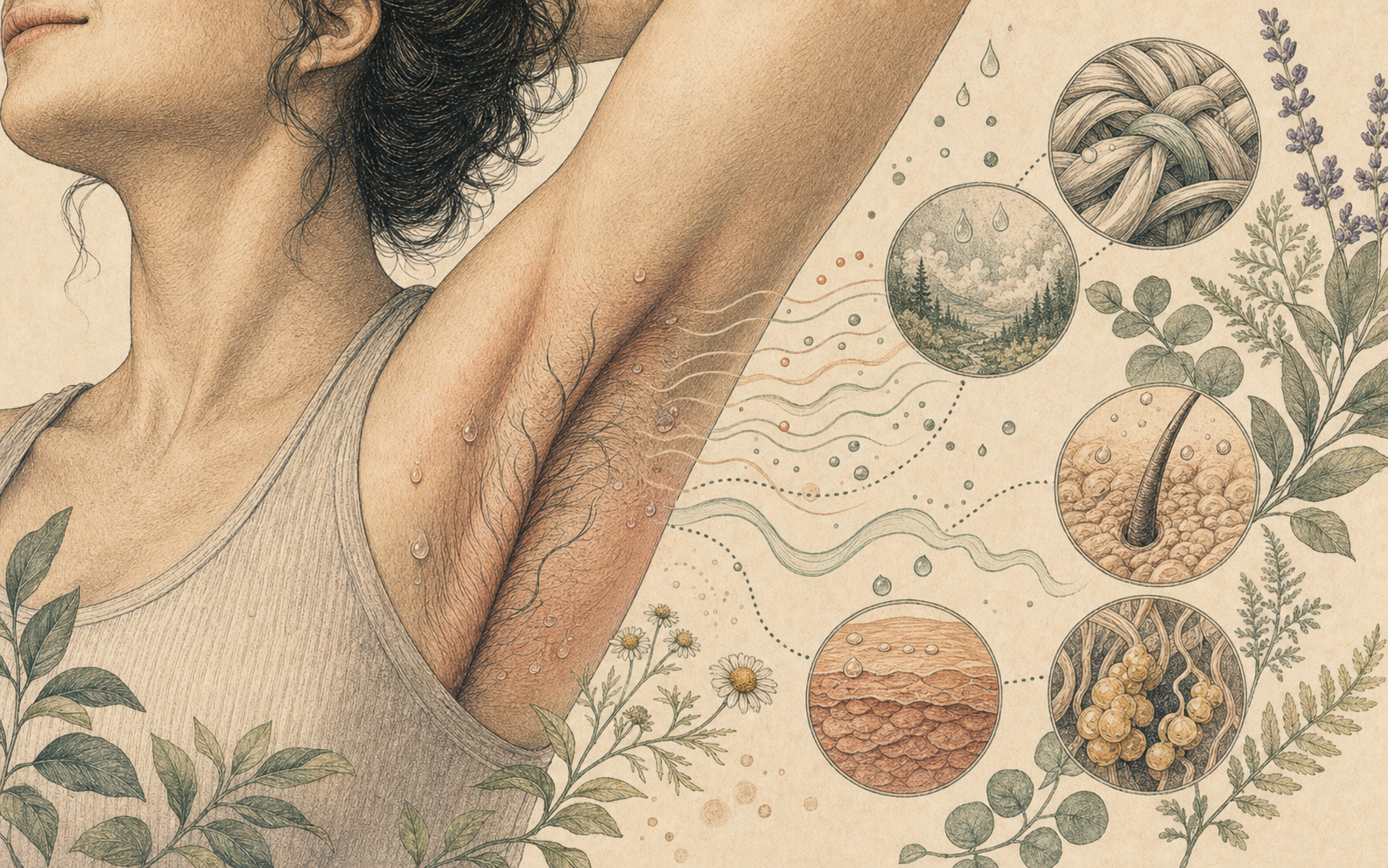
The underarm has its own conditions
A forearm spends much of the day in open air. An underarm spends it in a fold: under fabric, near hair follicles and skin oils, with less airflow and more friction. It is normal skin in unusual conditions.
That is why underarm care feels different from washing an elbow. The area is warmer, more covered, and more socially loaded. Anatomy references call it the axilla. In daily life, it is the place your shirt notices first.
Two sweat systems meet here
Eccrine glands are spread widely across the body and help with cooling. Apocrine glands are concentrated in hair-bearing regions, including the underarm, and open into hair follicles. Both are part of the body's normal sweat system.1, 4
The underarm is specific because those pathways meet a real environment: shirt fabric, trapped warmth, skin-surface chemistry, friction, shaving habits, deodorant residue, and laundry choices.

Microbes belong here
The underarm microbiome belongs here. Skin carries microbes because it is alive. What matters is what happens when natural underarm secretions meet certain bacteria and enzymes over time. James AG and colleagues, writing in FEMS Microbiology Ecology in 2013, and Minhas, Bawdon, Herman and colleagues in eLife in 2018, describe odor as a biochemical process in which low-odor material becomes more noticeable volatile compounds.2, 3
Odor is a local reaction, not a character judgment.
The shirt is part of the climate
The underarm includes what touches it. A tight sleeve or synthetic workout top changes airflow and keeps moisture around longer. A backpack strap or blazer lining can do the same. Fabric is part of the setting.
A leave-on deodorant layer can help, but it also becomes another material in the warmest fold. Sometimes that works. Sometimes it mixes with sweat, fabric, and friction in a way you keep noticing later.

Underarm care can live in the shower
GoodSweat starts with the underarm as a specific place, not a problem to cover. It is a shower deodorant for the shower routine: squeeze on, massage in, rinse clean, get dressed without the sticky swipe.
Sources
- Patel BC, Treister AD, McCausland C, Lio PA, Jozsa F. "Anatomy, Skin, Sudoriferous Gland." StatPearls, NCBI Bookshelf. Anatomy reference for eccrine and apocrine glands, thermoregulation, and emotional sweating.
- James AG, Austin CJ, Cox DS, Taylor D, Calvert R. "Microbiological and biochemical origins of human axillary odour." FEMS Microbiology Ecology, 2013;83(3):527-540. Peer-reviewed axillary odor review used for the underarm-specific odor chemistry and microbiology frame.
- Minhas GS, Bawdon D, Herman R, Rudden M, Stone AP, James AG, Thomas GH. "Structural basis of malodour precursor transport in the human axilla." eLife, 2018;7:e34995. Molecular detail on odorless malodor precursors and axillary microbes.
- "Sweating and body odor." Public medical overview of sweating, apocrine glands, and body odor basics.