Food and body scent
How garlic relates to body odor
Garlic, alcohol, and big meals can change scent at the edges. Breath, skin, underarms, and shirts need different care, and none of it needs food guilt.
Yes, food can matter
Garlic and other foods can affect body scent for some people. The effect is real enough to study and too small to run your life.
Separate the signals
Breath, skin scent, underarm odor, and shirt odor are different. Treating them as one thing creates extra worry.
Keep dinner normal
Eat the food. Wash well. Wear a clean shirt. Keep underarm care in the shower and away from food rules.

Food can change scent
You eat garlic. Or curry. Or a burger and a drink. Later, on the train or in bed, you wonder if your whole body is broadcasting the menu.
That worry is common because food scent feels personal. Breath is obvious. Skin is harder to read. Underarms are harder still because they sit under fabric, heat, and whatever product was already there.
The honest answer: food can matter, but usually at the edges. A small study in Appetite found that garlic consumption changed how raters perceived men's axillary odor samples.1 Another small study in Chemical Senses found that body odor ratings changed when men ate meat versus a non-meat diet for a short period.2
Interesting, yes. A reason to turn dinner into rules, no.
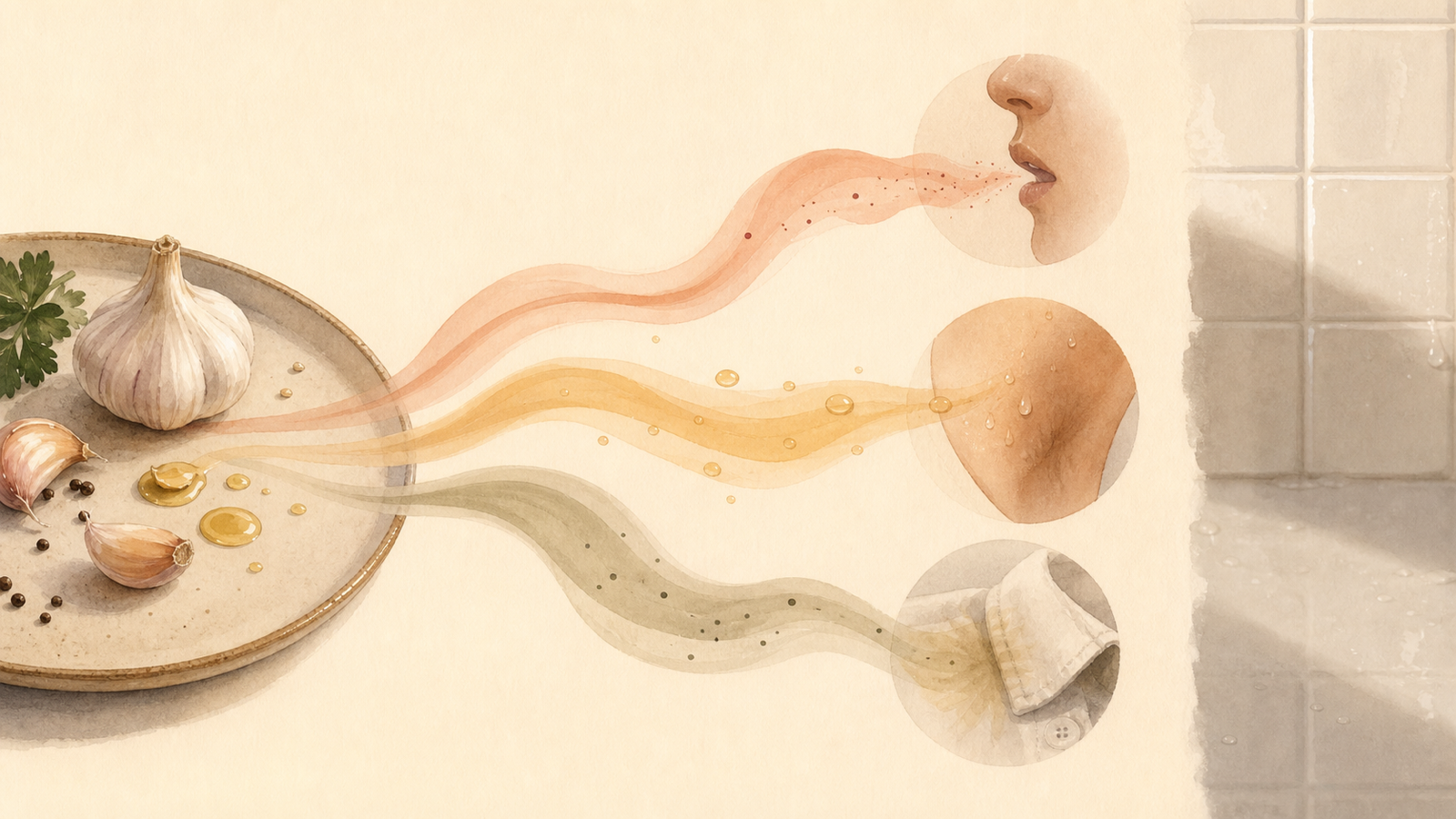
Separate what you are smelling
Breath is the fast one. Garlic breath can come from the mouth and from compounds moving through the body and back out through the lungs. Brush, floss, hydrate, wait. That is breath work.
Skin scent is slower and softer. Some food compounds can leave through sweat or skin oils. Most people will notice this most after alcohol, heavy spice, or very aromatic meals. It usually reads as "I had a big night" more than "my underarms are the problem."
Underarm odor has a different cause. Research on axillary odor points to underarm gland secretions meeting local skin microbes, which can create odor compounds.3 Food can sit around the edges of that process.
Fabric is its own problem. A shirt can hold sweat, deodorant residue, fragrance, and skin oils. Sometimes the shirt smells louder than the body wearing it.
What else could be happening
Stress sweat, synthetic fabric, an old deodorant layer, a rushed shower, or a shirt that needed a hotter wash can matter more than what was on the plate.
That is good news. You can keep your life big and your routine clear.
A simple after-dinner routine
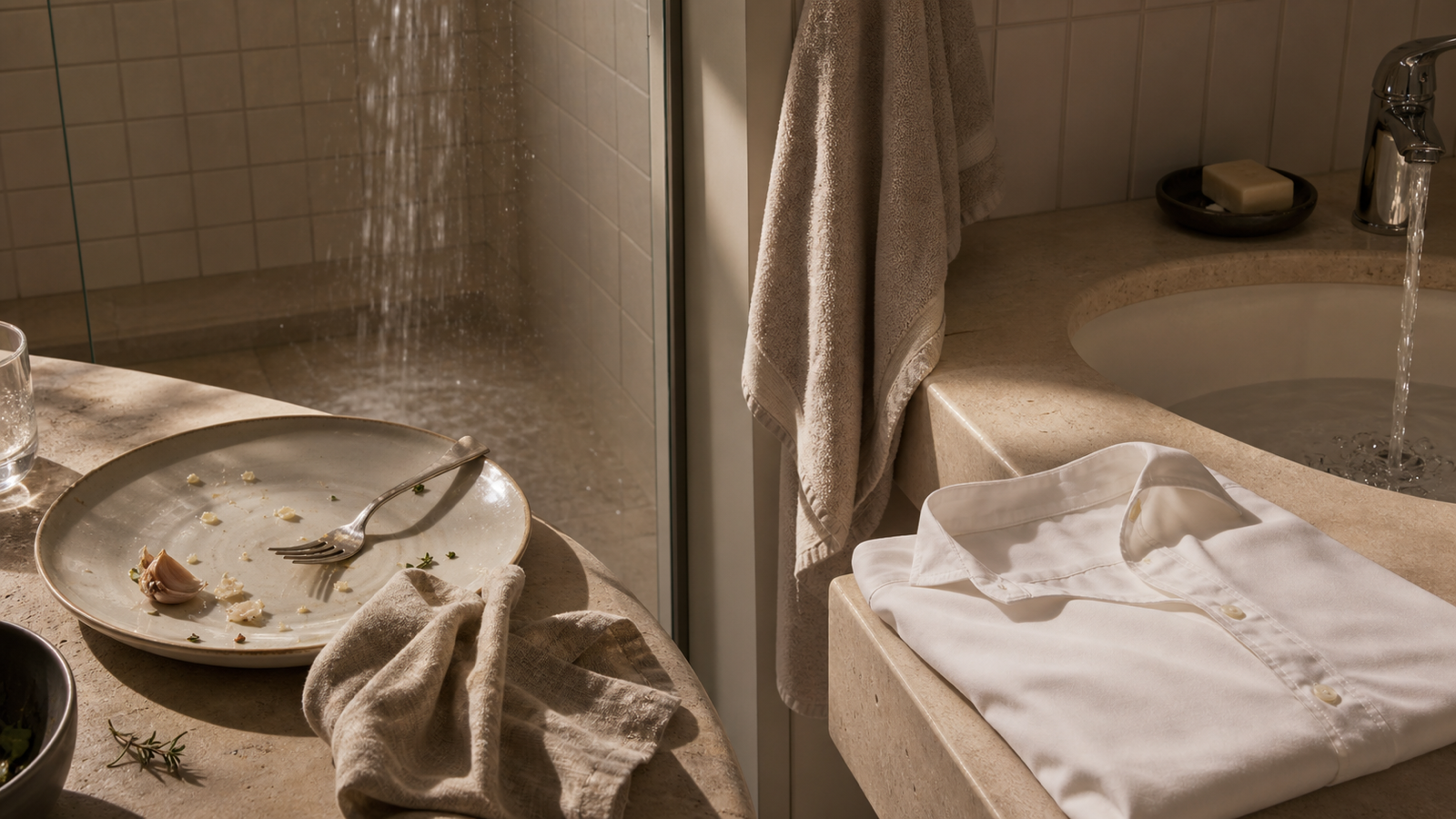
When scent is on your mind, start with basics. Drink water. Brush your teeth. If you have been sweating, shower. Wash the underarm directly, rinse clean, dry well, and put on a clean shirt.
GoodSweat keeps underarm care in the shower: squeeze on, massage in, rinse clean, then get dressed without the sticky swipe.
That is enough structure for a normal life. Eat the garlic. Enjoy the dinner. Let clean be a routine rather than a punishment.
Sources
- Fialova J, Roberts SC, Havlicek J. "Consumption of garlic positively affects hedonic perception of axillary body odour." Appetite, 2016;97:8-15. Used for the small controlled studies on garlic intake and rated axillary odor samples.
- Havlicek J, Lenochova P. "The effect of meat consumption on body odor attractiveness." Chemical Senses, 2006;31(8):747-752. Used as a limited example of diet affecting rated body odor in a controlled setting.
- James AG, Austin CJ, Cox DS, Taylor D, Calvert R. "Microbiological and biochemical origins of human axillary odour." FEMS Microbiology Ecology, 2013;83(3):527-540. Used for the basic underarm odor mechanism: gland secretions plus local microbial chemistry.