Sweat myth check
What sweat actually does
Sweat mostly helps cool you down. Detox claims ask it to do a job your kidneys, liver, lungs, and digestive system already handle.
Sweat cools you
The main job of sweating is temperature control: water and salts reach the skin so evaporation can move heat away.
Organs handle waste
Kidneys, liver, lungs, and the digestive system do the routine processing and excretion work.
Trace amounts need context
Some substances can be measured in sweat. That fact alone cannot turn sweating into a detox program.

"Sweat it out" makes a nice story
The phrase feels satisfying: sweat out the weekend, sweat out the wine, sweat out the modern chemicals wellness ads never quite name.
The body is plainer than that. Sweat is mostly temperature control. Eccrine sweat glands release a watery, salty fluid onto the skin. As that fluid evaporates, it helps cool the body.1
That job is enough. Sweat deserves respect without turning it into a detox ritual.
Detox claims need a clear noun
"Toxins" often gets used as a catchall for whatever people already worry about: pollution, alcohol, stress, heavy metals, processed food. Then the sales pitch offers a way out. Sweat more, drink this, wrap that, sit there, buy the thing.
Public-health guidance is much more careful. The National Center for Complementary and Integrative Health notes that detoxes and cleanses are marketed as ways to remove toxins or promote health, but the human evidence is limited and some programs can be unsafe or falsely advertised.2
Your body already has cleanup systems
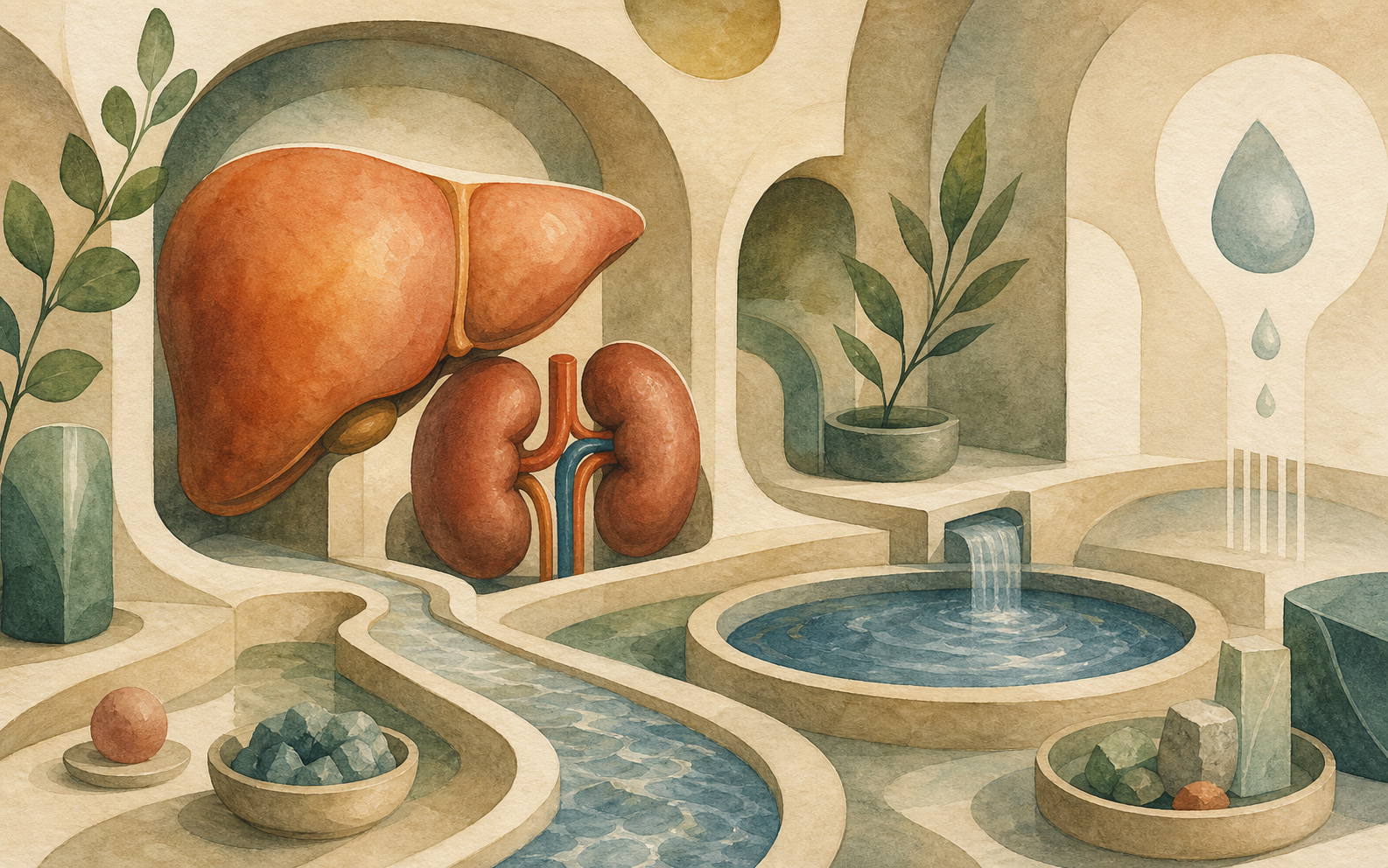
Your kidneys filter blood, remove wastes and extra water, and make urine. NIDDK describes kidneys as organs that remove wastes, extra fluid, and acid while helping maintain the balance of water, salts, and minerals in the blood.3
Your liver processes substances arriving from the digestive tract, including medications and potentially toxic substances. It can alter, store, detoxify, or route them for elimination. NCBI's InformedHealth overview explains that blood from the digestive organs reaches the liver carrying nutrients, medication, and toxic substances, and the liver processes them.4
A lab trace needs context
Sweat can contain electrolytes, metabolites, and tiny amounts of other substances. Lindsay Baker's 2019 review in Temperature goes deep on sweat composition and on how collection methods change what researchers measure.1
This is where weak wellness claims make their leap. If a substance can be measured in sweat, the story becomes: sweating is how you get rid of it. A trace amount in sweat means neither that sweat is the body's main disposal route nor that a sauna, hard workout, or product can substitute for the organs that handle metabolic waste.
Sweat can carry incidental cargo. Its main job is cooling.
The myth adds shame to normal sweat
When sweat gets framed as toxic waste, washing starts to feel like moral cleanup. Someone who sweats more becomes "dirtier." Someone who smells after a commute seems to have failed a purity test. That is old shame in newer packaging.
MedlinePlus describes sweating as how the body cools itself and notes that odor happens when sweat mixes with bacteria on the skin.5 Odor comes from skin, microbes, fabric, residue, and timing meeting at once. It tells you nothing about your character.
Respect sweat, then rinse clean
Sweat helps you get through heat, movement, nerves, and having places to be. None of that needs detox language to make sense.
GoodSweat is the first US shower deodorant, built for the shower moment after sweat has happened: squeeze a small amount on, massage in, rinse clean, then get dressed without the sticky swipe.
You can like sweating, dislike how it feels under a shirt, and shower it off afterward without calling any of it detox.

Sources
- Baker LB. "Physiology of sweat gland function: The roles of sweating and sweat composition in human health." Temperature (Austin), 2019;6(3):211-259. Review of sweat physiology, thermoregulation, and sweat composition nuance.
- ""Detoxes" and "Cleanses": What You Need To Know." Public-health overview of detox and cleanse claims, evidence limits, and safety concerns.
- "Your Kidneys & How They Work." NIDDK overview of kidney filtration, waste removal, and fluid/mineral balance.
- InformedHealth.org. "In brief: How does the liver work?" NCBI Bookshelf, updated 2023. NCBI Bookshelf overview of liver processing, detoxification, and excretion roles.
- "Sweat." U.S. National Library of Medicine patient-health page on sweating and body cooling.